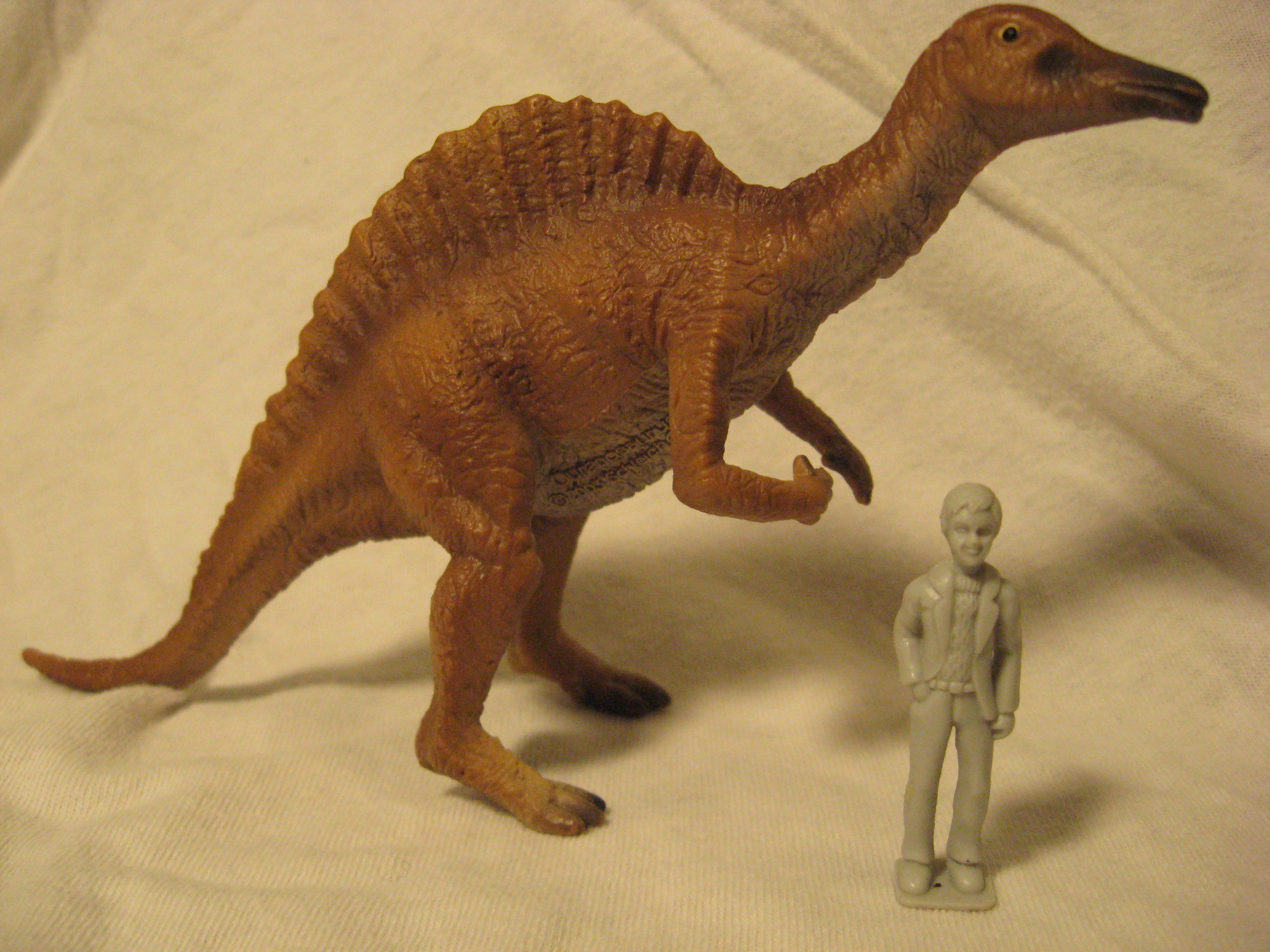
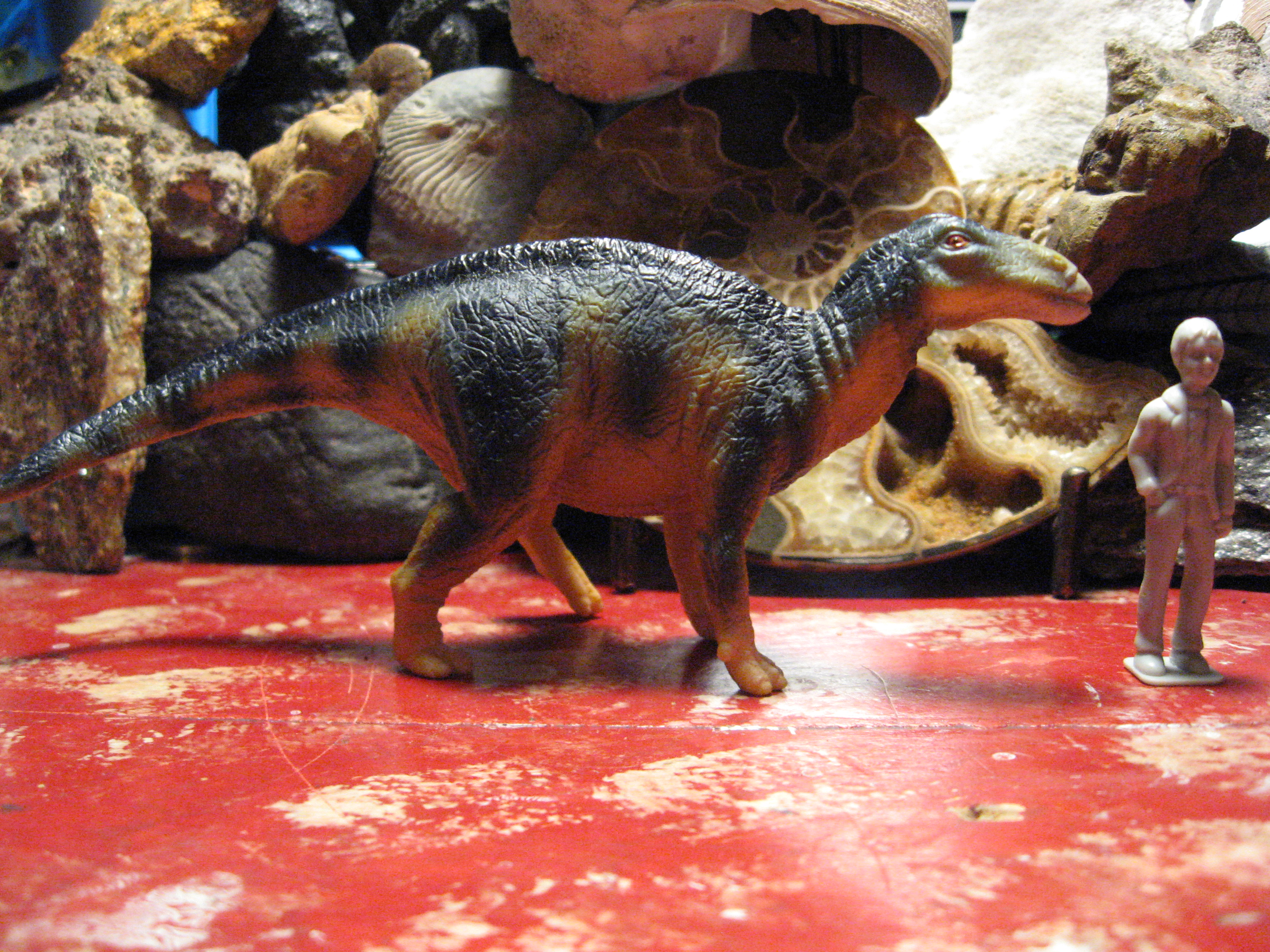
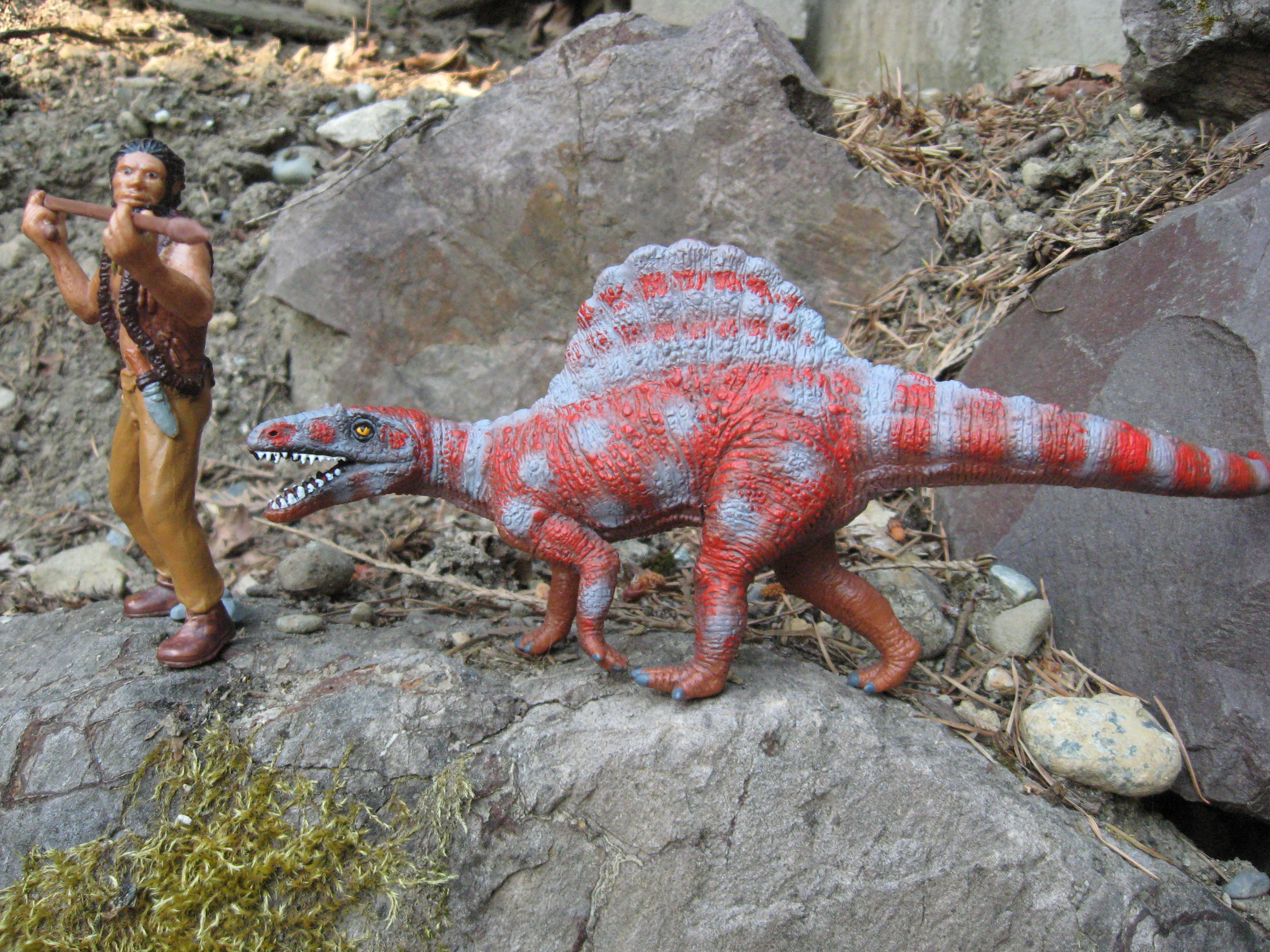
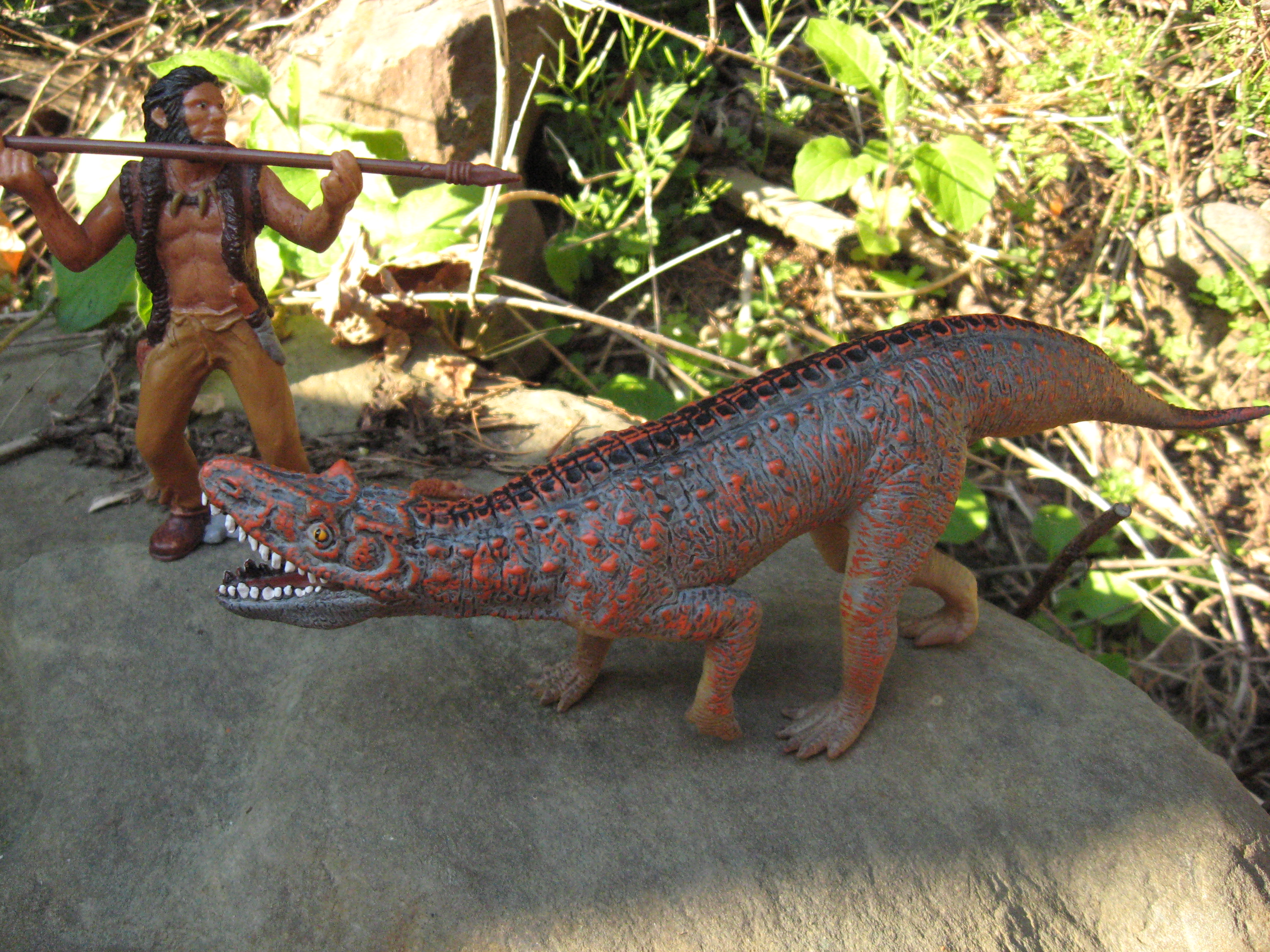
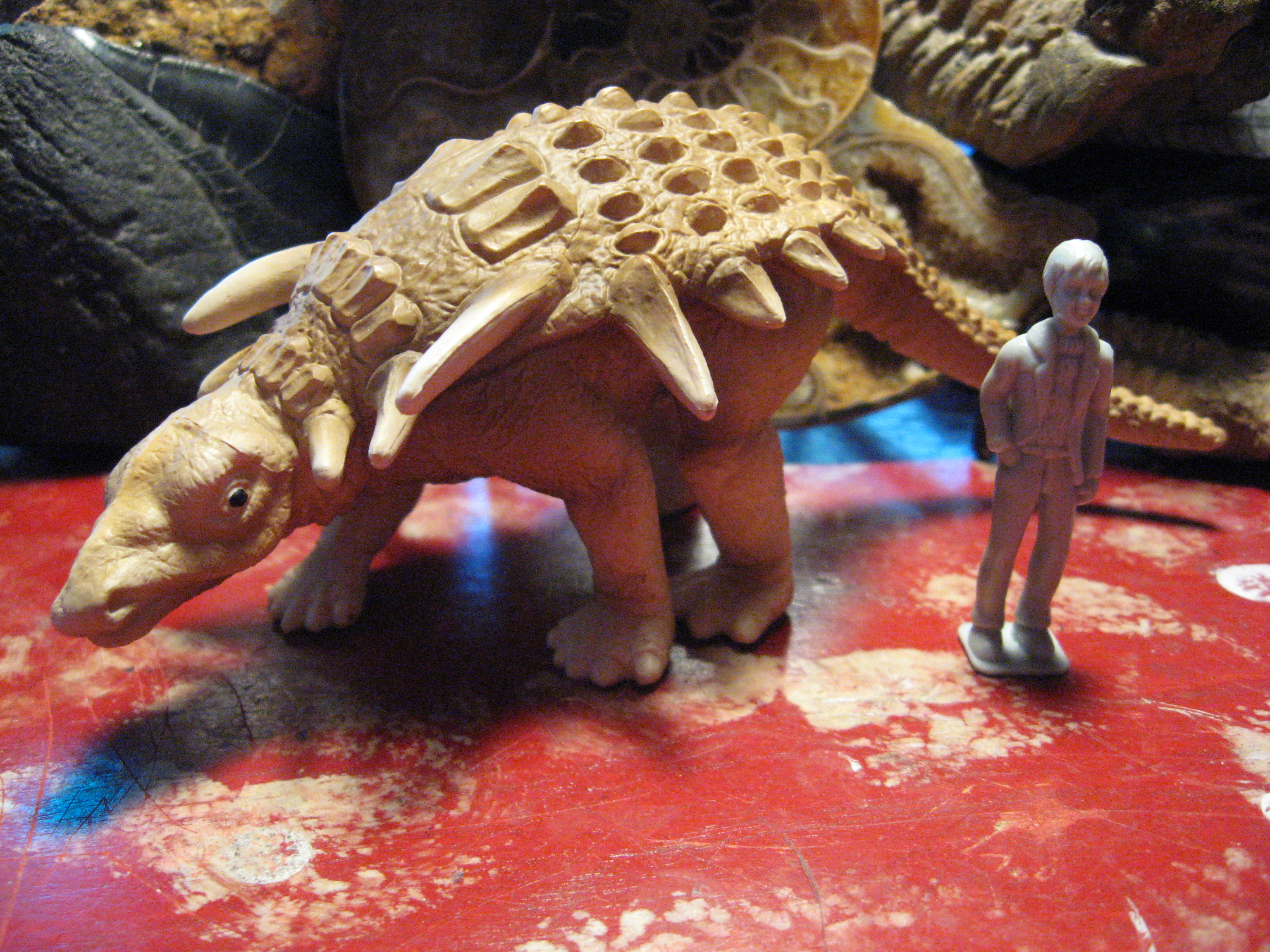
The 24 foot Ouranosaurus was an interesting ornithopod from Early Cretaceous Africa, where it coexisted with the fish-eating theropod Suchomimus. Its name means “brave lizard”, and some distinguishing traits of Ouranosaurus were its thumb spikes and the elongated neural spines of its back. It was once assumed that these spines supported a skin sail, but their robust form makes it...
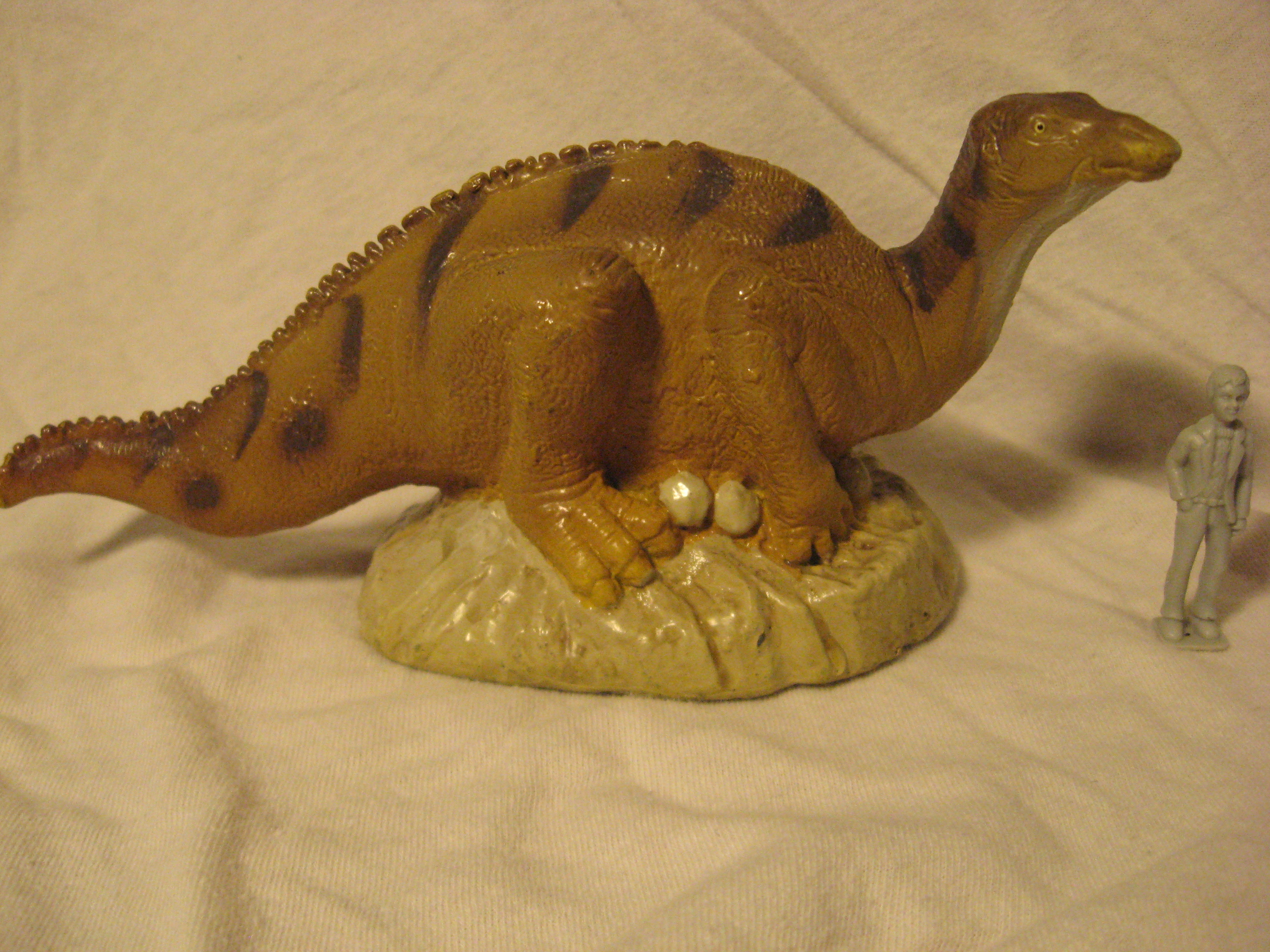
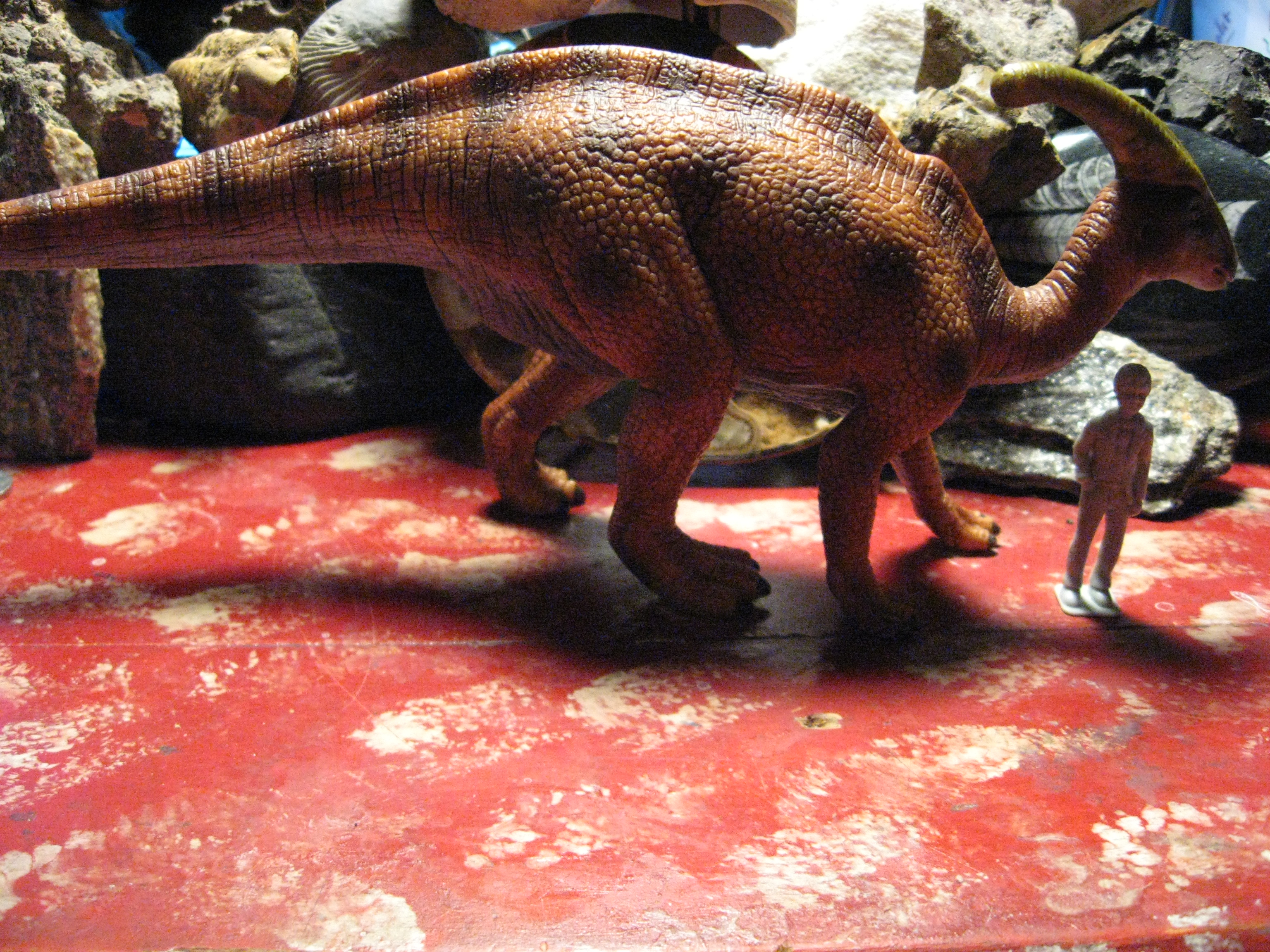
Size comparison of Maiasaura with a six foot man.
The Late Cretaceous hadrosaur Maiasaura has become famous for being the first large dinosaur to be discovered alongside direct evidence that it cared for its young. Fossil nests associated with this dinosaur show that young dinosaurs stayed in the nest well after hatching. First discovered in Montana and described by Jack Horner, its name means “good mother lizard”. As such,...
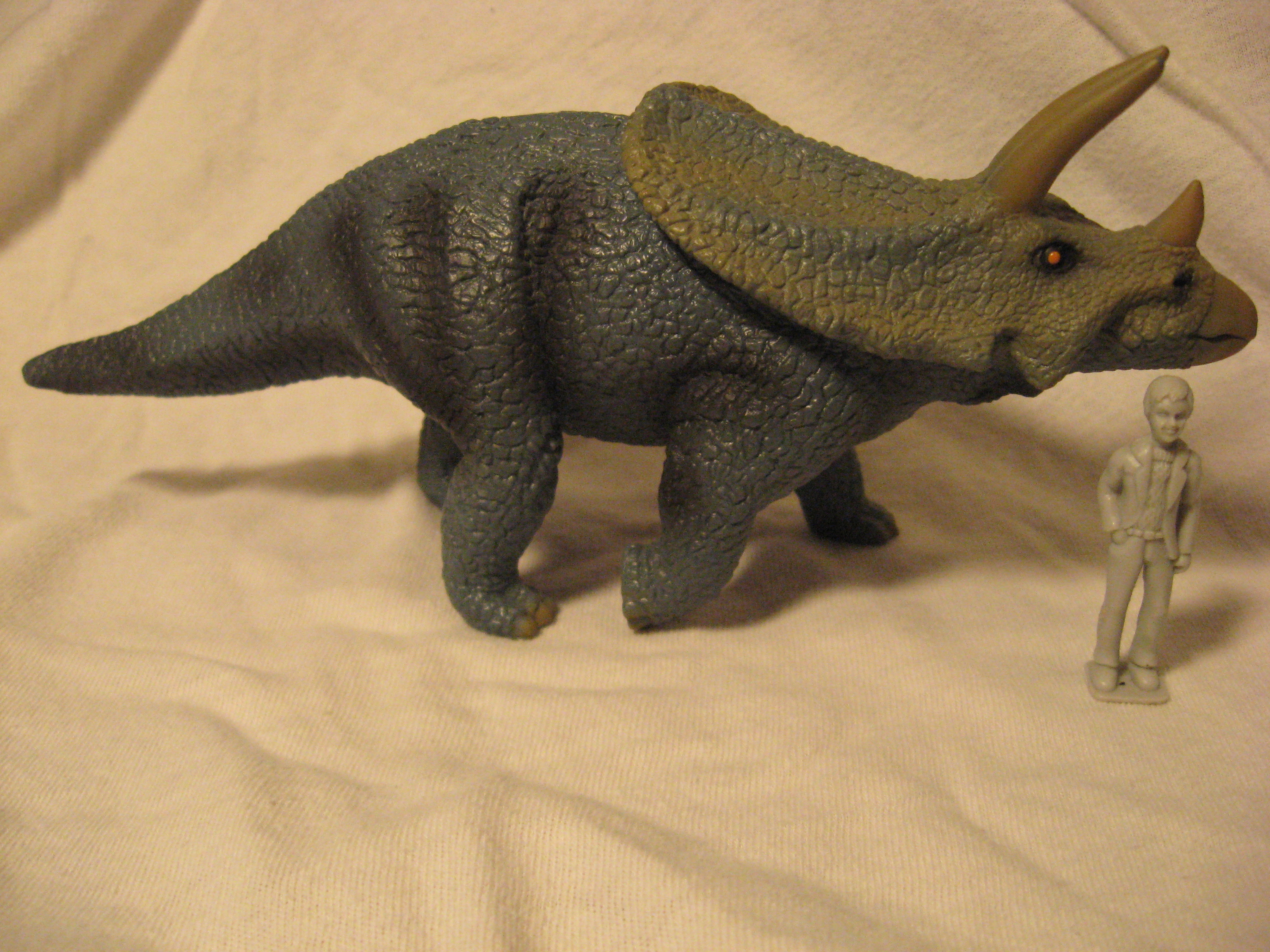
Size comparison of Torosaurus with a six foot man
Torosaurus was a Late Cretaceous ceratopsian from North America, and its nearly 9-foot skull was among the largest of any land-based organism in natural history. The holotype specimen was discovered in Wyoming in 1891 by John Hatcher and the genus Torosaurus was established by the famous American paleontologist Othniel C. Marsh shortly after. The animal was closely related to Triceratops...
Parasaurolophus is a well known lambeosaurine dinosaur from Late Cretaceous North America, where it lived near the Western Interior Seaway. It sported a large crest on its skull which may have been used for making vocalizations and has caused this genus to be easily recognizable to the public. The name means “near-crested reptile”. Parasaurolophus was a large animal at over...
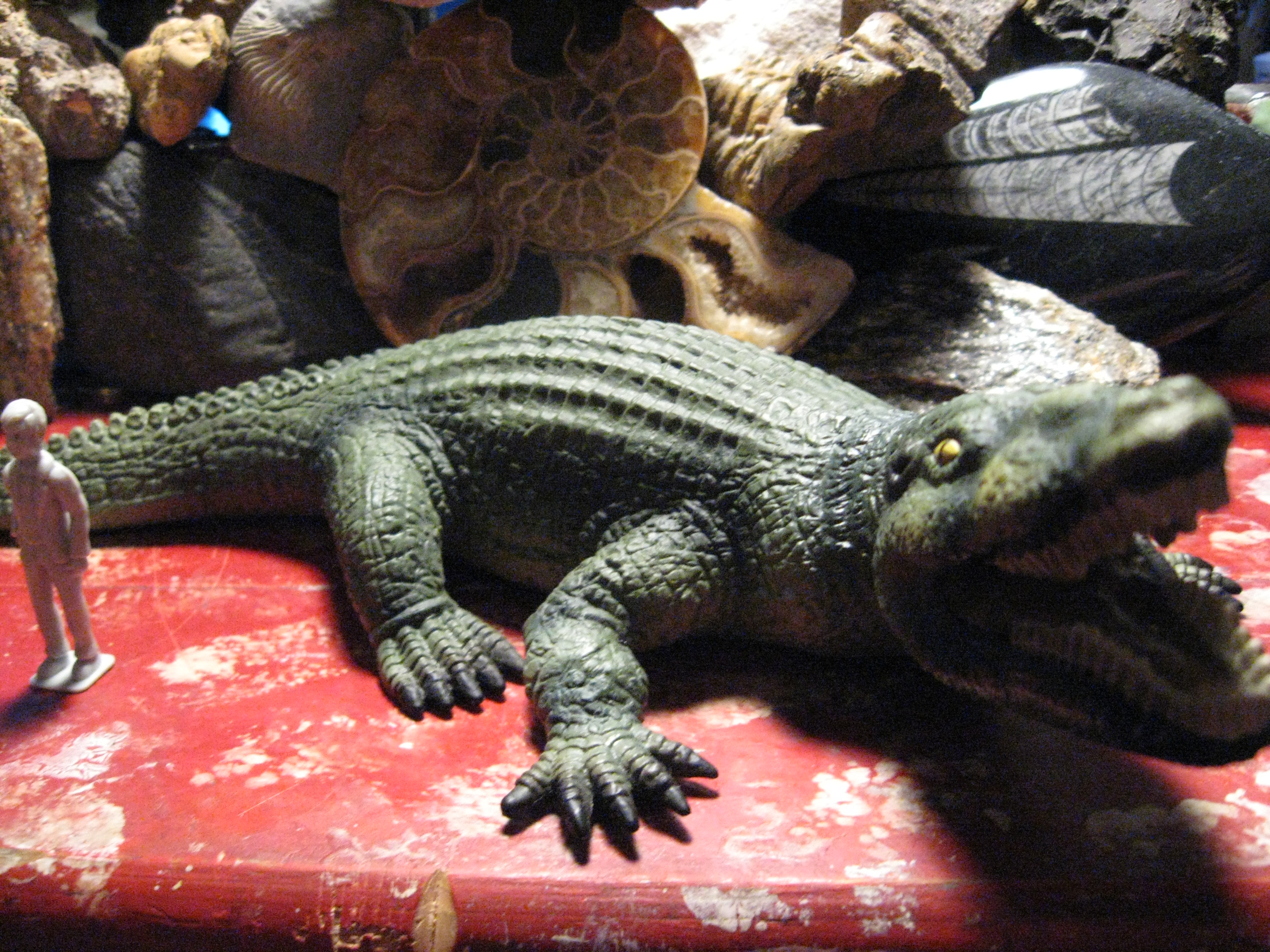
During the Mesozoic Era, the dinosaurs were the undisputed rulers of the land. However, more watery environments were ruled by other reptilian denizens. The waterways of North America during the Cretaceous period 75 million years ago were stalked by the massive 50 foot alligator Deinosuchus. With a name that fittingly means “terrible crocodile” (although it’s actually a giant primitive alligator),...
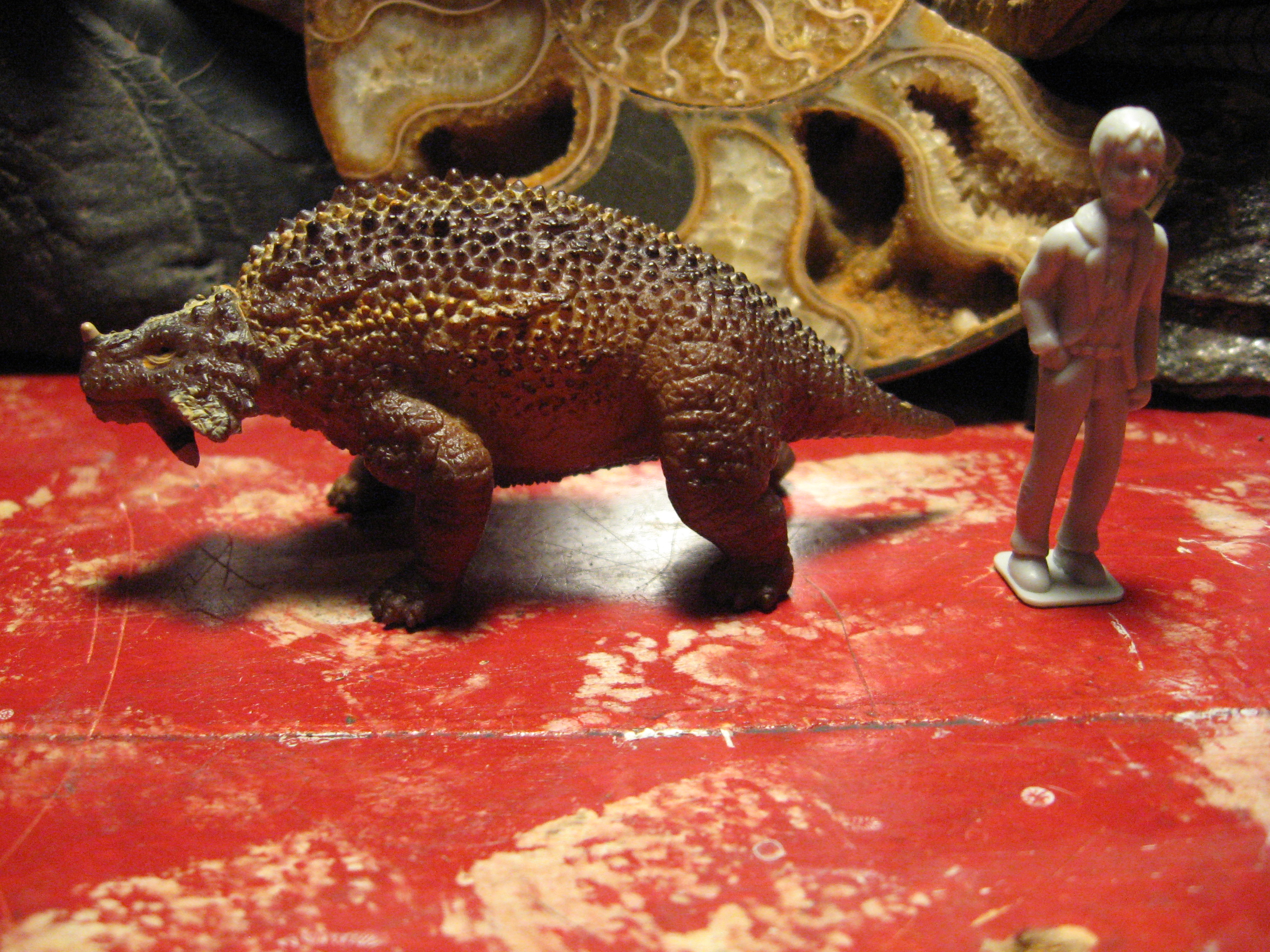
The bear-sized pareiasaur Scutosaurus inhabited the semi-arid Late Permian landscape of Russia, likely being common on floodplains and in similar environs which would have supported in relative abundance what plant life could be found in that region 250 million years ago. Scutosaurus was an extremely robust animal reaching up to 8.5 feet in length and its skin was studded with...
The primitive ornithopod dinosaur Iguanodon lived during the Early Cretaceous period in Europe, approximately 125 million years ago. Animals like Iguanodon eventually gave rise to the hadrosaurs of the Late Cretaceous. In the past, numerous remains from all over the globe have been attributed to this genus, spanning from the Late Jurassic all the way until the end of the...
The hognosed Paratypothorax was, at up to 3 meters in length, one of the largest of the aetosaurs. Aetosaurs were a clade of quadrupedal armored archosaurs (“ruling reptiles”) which existed during the Late Triassic. Paratypothorax lived some 210 million years ago in Europe. The name translates to “near pitted armor”. Although its bony armor causes it to resemble a primitive...
Arizonasaurus was a 12 foot long, predatory, long legged Rauisuchian related to modern crocodilians, and it was a top predator in the lower Triassic ecosystem of yep, you guessed it, Arizona roughly 240 million years ago. The name translates simply to “Arizona reptile”. Although to a layperson Arizonsaurus and other Rauisuchians may resemble dinosaurs, they were not. In fact, Arizonasaurus...
Batrachotomus was a primitive basal rauisuchian, which were a group of crocodile-like archosaurs adapted to a strictly terrestrial lifestyle, and were the dominant predators of the Triassic. Batrachotomus existed around 235 million years ago during the Ladinian Age of the Middle Triassic, and is considered by many paleontologists to be an early form of the more widely recognized rauisuchian genus...
The burly, heavily armored, herbivorous nodosaur Edmontonia inhabited North America during the Late Cretaceous period some 70 million years ago. The name simply means “from Edmonton”, as the type specimen was discovered in the Horseshoe Canyon Formation near the city of Edmonton in Alberta, Canada by George Paterson in 1924. At roughly 22 feet in length, Edmontonia was a relatively...
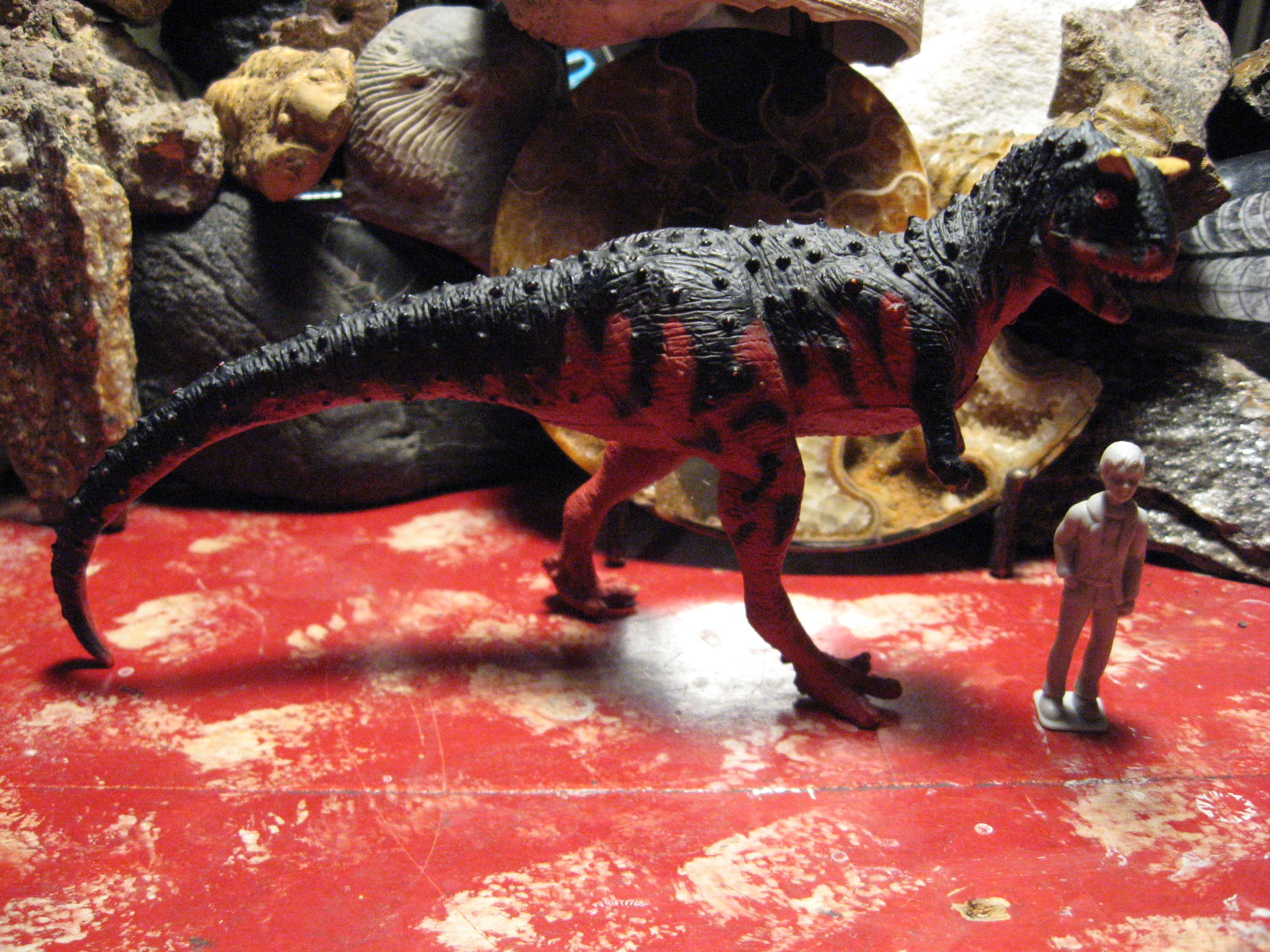
The abelisaurid Carnotaurus was a peculiar theropod from Late Cretaceous Patagonia which survived up until the demise of the dinosaurs 65 million years ago. At 30 feet long, Carnotaurus was likely a top predator in its ecosystem. The name means “flesh bull” and refers to the two wing-like brow horns protruding above the eyes and the animal’s characteristically short, deep...

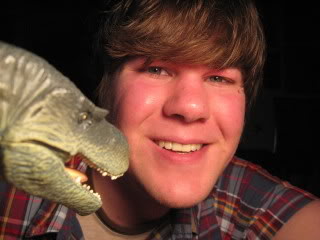 My name is Adam Frugé. I go by itstwentybelow on the forums. I have been fascinated by paleontology since I was three years old and have visited numerous fossil sites across North America, including Dinosaur Provincial Park in Alberta, Canada and Dinosaur National Monument in Utah, USA. I have displayed part of my collection in a state fair. In addition to dinosaur figures I also collect fossils. I currently live in Pullman, Washington where I am studying Anthropology at Washington State University, with special interest in human evolution and archaeology.