It is with a heavy heart that I share my review of the Hammond Collection Dilophosaurus because I’m not the one that was supposed to review it. Fellow reviewer, EmperorDinobot (Luis Perez) was supposed to write about this one but on July 21st he passed away. His membership on the forum predates my own and his first blog review was...
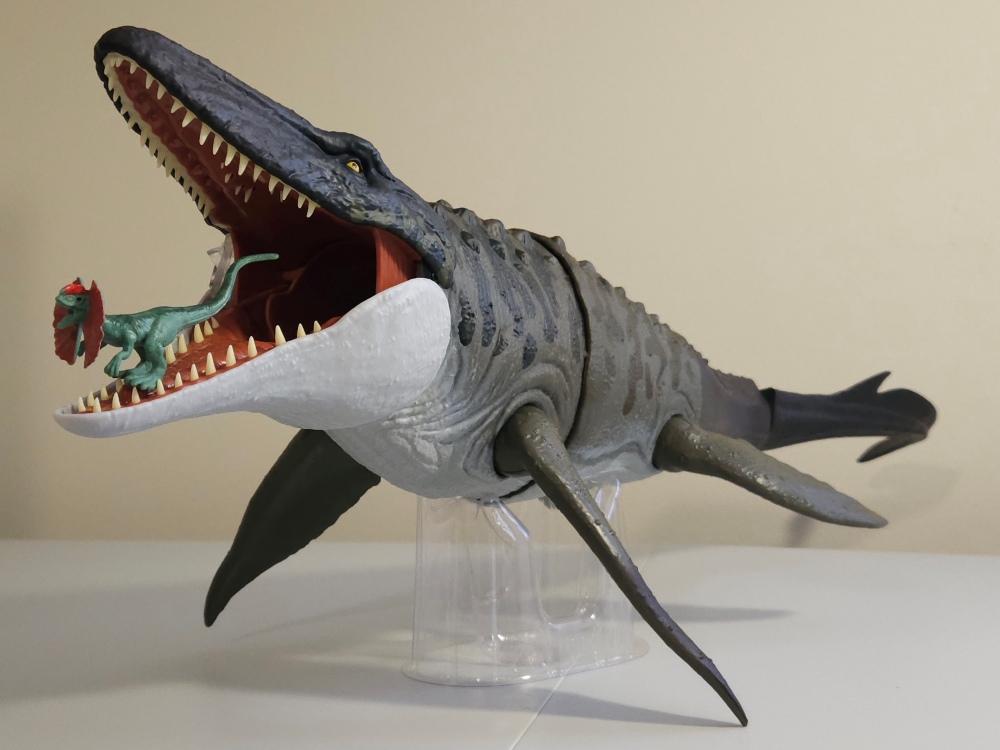
I generally don’t have favorable opinions about the Jurassic World trilogy, but I’ll give them credit for one thing: reinstating Mosasaurus as the A-List paleo-media star it deserves to be. Mosasaurus has been a staple of Mesozoic media since its discovery two centuries ago now; but thanks to its prominent appearances in the Jurassic World films, the mighty quasi-lizard of...
With its crown of thorny spikes and a name meaning “demon from the river Styx”, Stygimoloch is one of the coolest dinosaurs around. Too bad then that many consider it to be a juvenile of Pachycephalosaurus or a different species of Pachycephalosaurus. Regardless of whatever Stygimoloch is, it will live on immortalized in the Jurassic World franchise. Stygimoloch made its...
Discovered in Russia, Kileskus is a relatively small tyrannosauroid that lived during the Middle Jurassic period some 166 million years ago. While its remains are rather fragmentary, they are enough to determine that their owner was a proceratosaurid, closely related to Guanlong and Proceratosaurus itself.
Mattel released what I believe to be the very first toy of Kileskus in 2024....
I first heard of Inostrancevia in a 1994 episode of Paleo-World titled “Tale of the Sail”, about the synapsids that dominated the Permian period. It has been one of my favorite prehistoric animal names ever since, with a pleasant mouthfeel even if the name sounds cooler than it is. The name means “after Inostrantsev”, in honor of the geologist Alexander...
Described in 1979 by Jack Horner (and Robert Makela), the “good mother lizard” and its communal nesting sites in Montana were discovered just in time to corroborate the notion that dinosaurs were active, warm blooded, bird-like animals, that invested time in rearing their offspring. Maiasaura became a poster child for the Dinosaur Renaissance and along with Jack Horner was featured...
The metriorhynchid Torvoneustes swam the savage seas during the Late Jurassic period around 145 million years ago. It was about 4.7 metres long, the same length as a very large American alligator and would have been a deadly predator of cephalopods, fish, and other marine reptiles—although like most other metriorhynchids, it would have in turn fallen victim to bigger pliosaurs.
A Torvoneustes is...
Every Mattel Jurassic World Tyrannosaurus I’ve bought since 2018 was supposed to be the last one but when the company keeps releasing new and improved versions of one of your favorite pop culture dinosaur designs, it’s hard to resist. I now have 7 Mattel Tyrannosaurus toys but to be fair, that’s only a fraction of the number that Mattel has...
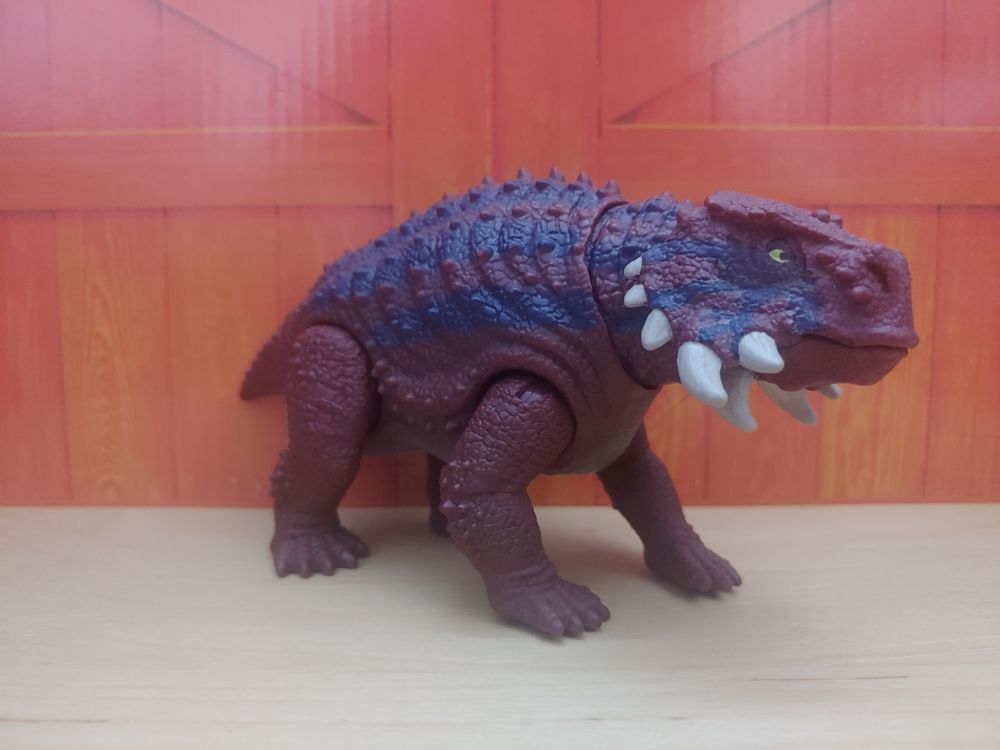
While still relatively obscure when compared to the likes of Dimetrodon, which is arguably the most famous Permian period animal by far, Scutosaurus has had a fair bit of attention to bring it into the limelight, which is still more then most animals from the Permian period. Perhaps its most notable appearance was in BBC’s 2005 Walking with Monsters, which...
The very first illustration of Hypsilophodon that I ever laid eyes on depicted it as a very lizard-like animal perched high on a tree branch, an erroneous notion that arose back in 1912 and persisted until 1971 when it was finally debunked—although that didn’t stop children’s dinosaur books from continuing to portray Hypsilophodon as arboreal until well into the 1980s. We know now that...
Although I no longer hold The Lost World: Jurassic Park in high regard, I do have nostalgia for it. I was 13 when the movie was released and I don’t think I was ever more hyped for a film, aside from the first Jurassic Park, perhaps. The marketing campaign for it was intense and with the movie being announced two...
Discovered in the Woburn Sands Formation in England and formally described in 1874, Craterosaurus was a relatively small stegosaur that lived during the Early Cretaceous some 113-112 million years ago.
Mattel released the first and so far only Craterosaurus toy in 2024 as part of their Danger Pack series. It is sculpted in an alert pose with its legs bent and its tail...