
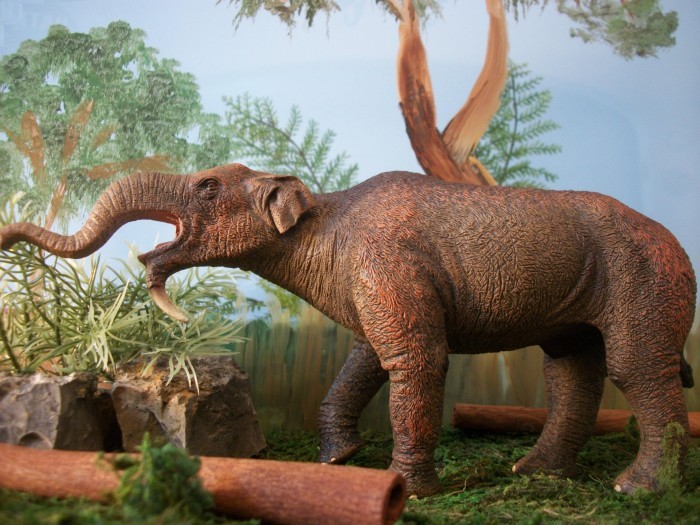
History: One of the biggest Proboscideans of all time lived during the Early Miocene through to mid Pleistocene, yet it is largely forgotten by the general public. The Woolly Mammoth gets all the attention and love, with appearances in film, literature, and in toy form.
Classification: Mammal



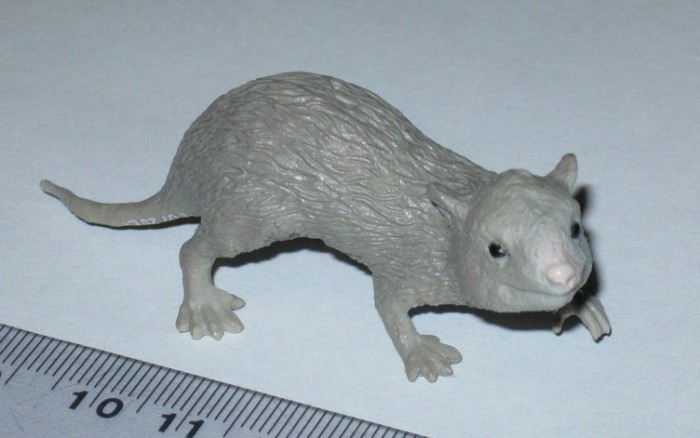
Review: Walking with Dinosaurs 3D, mini figures (Vivid Toy Group Ltd)
4.3 (15 votes)
Review and photos by Stargatedalek (unless otherwise stated), edited by Plesiosauria.
First off I’d like to start off my first review with a brief apology. I promised this review months ago, but between initial delays and my repeatedly putting it off [plus some tardiness on our part too – Ed] I’m only just now getting around to it.
First off I’d like to start off my first review with a brief apology. I promised this review months ago, but between initial delays and my repeatedly putting it off [plus some tardiness on our part too – Ed] I’m only just now getting around to it.
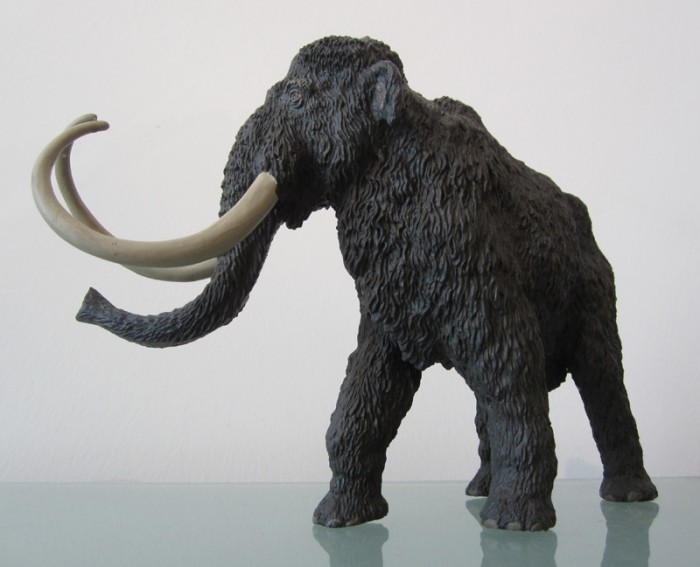
Review: Woolly mammoth (Carnegie Collection by Safari Ltd)
4.9 (26 votes)
There’s a vast array mammoth models out there in the world of prehistoric animal figures but they rarely get much attention here on the Dinosaur Toy Blog. That is, of course, because they are just boring old mammals, but let’s not hold this against them, they can’t help it.
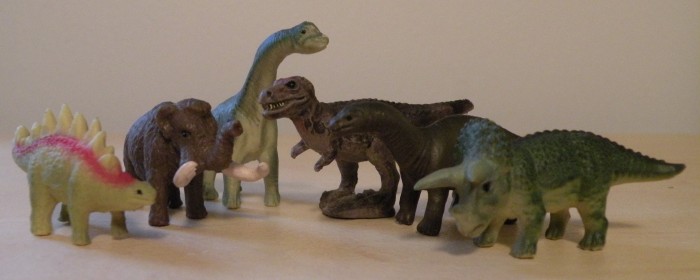
Review: Micro Tiere Collection (Bullyland)
2.9 (7 votes)
Back in 2010 our own Libraraptor reviewed a little Apatosaurus, part of Bullyland’s Micro Tiere Collection released in 2005. Having found the same little figure in an eBay lot I was very curious about this small but seemly high quality figure.
Review: Brontotherium (=Megacerops) (Mojö Fun)
4.3 (7 votes)
Review and photos by Megalosaurus, edited by Plesiossuria.
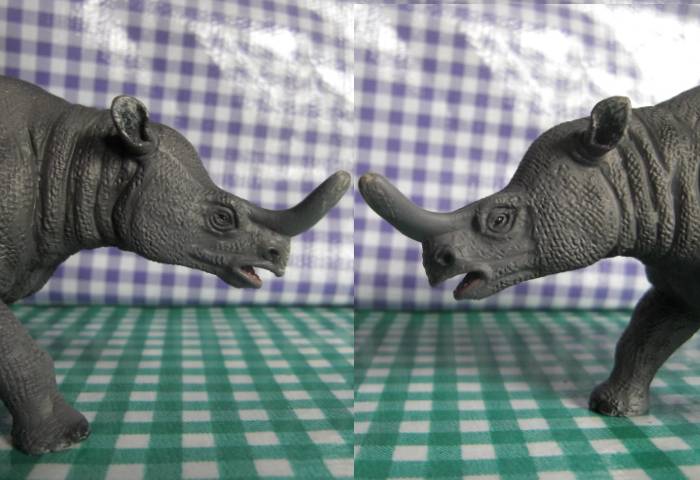
In 2012, CollectA released a pretty nice non-conventional toy model of a Megacerops (=‘Brontotherium’). This was good news for prehistoric mammal collectors. But in 2013, Mojö surprised us with the release of four prehistoric mammals.
In 2012, CollectA released a pretty nice non-conventional toy model of a Megacerops (=‘Brontotherium’). This was good news for prehistoric mammal collectors. But in 2013, Mojö surprised us with the release of four prehistoric mammals.
Review: Megacerops (CollectA)
4.7 (13 votes)
Review and photos by Nathan Morris (AKA ‘Takama’), edited by Plesiosauria.
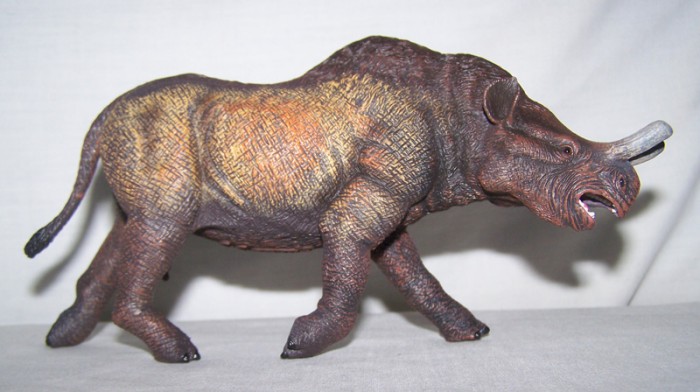
Megacerops was a large odd-toed ungulate that lived during the Late Eocene in North America. It is most commonly referred to by the synonymous name Brontotherium. Brontotherium means ‘thunder beast’, and its origins come from an old American legend that suggest that these beasts ran across the clouds, while causing thunder to roar with their footsteps.
Megacerops was a large odd-toed ungulate that lived during the Late Eocene in North America. It is most commonly referred to by the synonymous name Brontotherium. Brontotherium means ‘thunder beast’, and its origins come from an old American legend that suggest that these beasts ran across the clouds, while causing thunder to roar with their footsteps.
Review: Chalicotherium (Bullyland)
4.7 (6 votes)
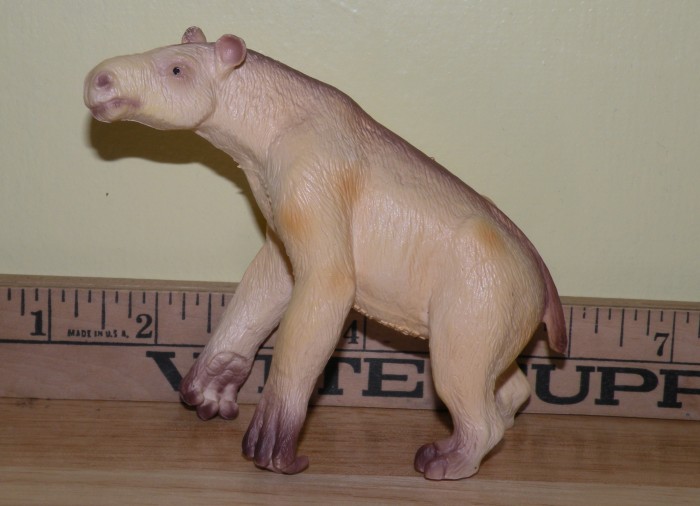
To celebrate Bullyland’s highly anticipated re-release of their prehistoric mammal collection I felt it was a good time to review the only Bullyland mammal figure I actually own, the Chalicotherium. For those of you out of the loop on this a brief overview is in order.
Review: Woolly Rhino (Safari Missing Links)
3.3 (7 votes)
Review by Patrick Król Padilha
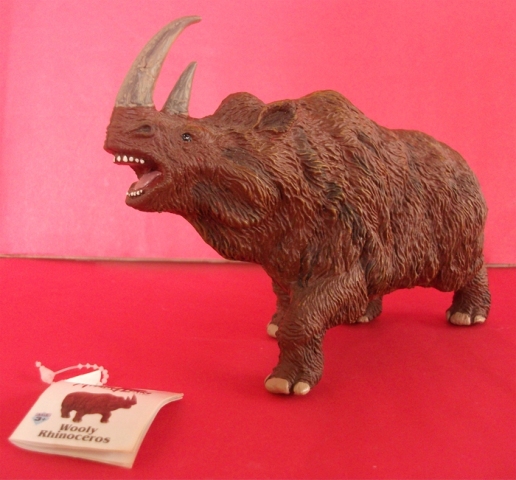
Today’s review is going to focus on a prehistoric mammal model, one of my favorites among all mammal figures I have. The animal it represents is the Woolly Rhinoceros, actually defined on the tag by genus and species as Coelodonta antiquitatis.
Today’s review is going to focus on a prehistoric mammal model, one of my favorites among all mammal figures I have. The animal it represents is the Woolly Rhinoceros, actually defined on the tag by genus and species as Coelodonta antiquitatis.
Review: Deinotherium (Bullyland)
4.4 (5 votes)
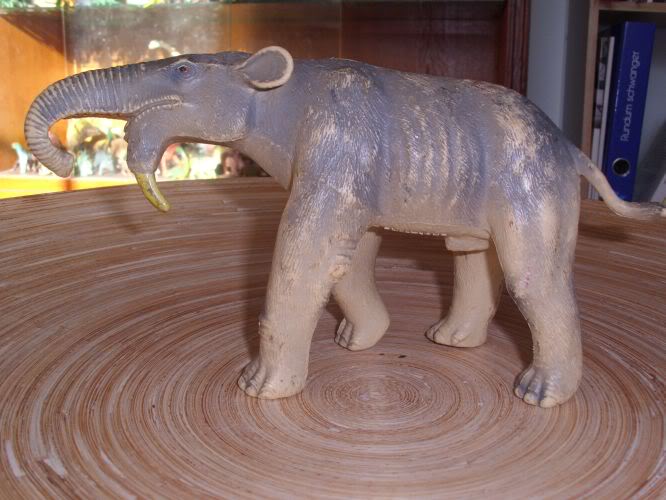
I guess it is time for a review of Bullyland Deinotherium.
It is a highly sought after figure, not yet a myth, but quite close. This is due to the relatively little number of Deinotheriums that have been produced and delivered.
Deinotherium (“terrible beast”) was a large prehistoric relative of modern-day elephants that appeared in the Middle Miocene and continued until the Early Pleistocene.
It is a highly sought after figure, not yet a myth, but quite close. This is due to the relatively little number of Deinotheriums that have been produced and delivered.
Deinotherium (“terrible beast”) was a large prehistoric relative of modern-day elephants that appeared in the Middle Miocene and continued until the Early Pleistocene.
Review: Megatherium (Marolin / VEB Plaho)
2.9 (7 votes)
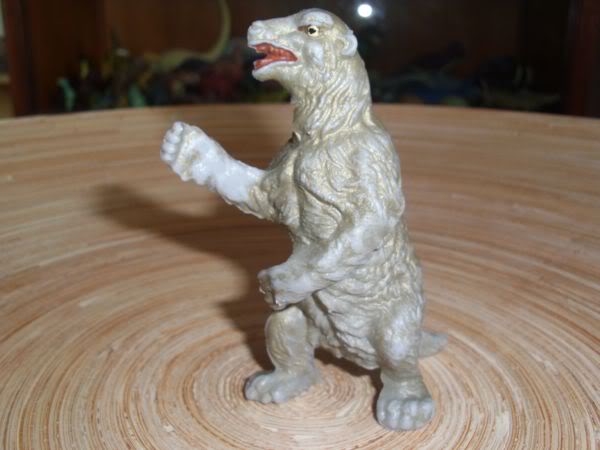
Megatherium is one of the most famous prehistoric mammals. The last Megatherium died somewhere at the end of the Pleistocene epoch, only 10000 years ago. Even hair and feces of this 6m long giant sloth have been found in caves in South America.
Review: Andrewsarchus (Bullyland)
2.9 (12 votes)
Edited by Dinotoyblog
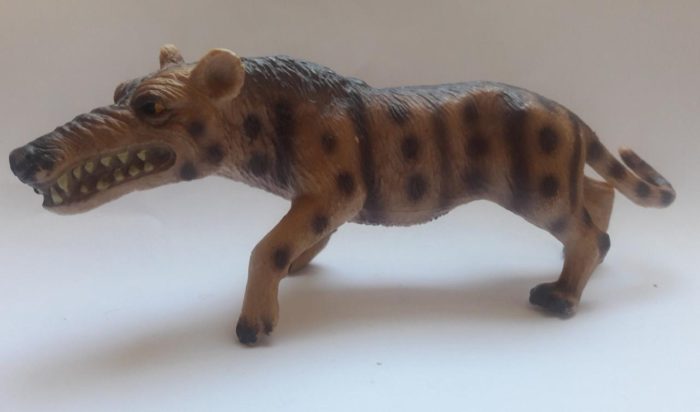
Andrewsarchus is interesting in terms of its discovery, its size, its habits and its look. It is a large basal mesonychid from the Eocene Epoch that is rarely depicted by toy lines. Safari and Bullyland are the only companies that released it as a commonly available toy figure.
Andrewsarchus is interesting in terms of its discovery, its size, its habits and its look. It is a large basal mesonychid from the Eocene Epoch that is rarely depicted by toy lines. Safari and Bullyland are the only companies that released it as a commonly available toy figure.
Review: Hyaenodon (AAA)
3.5 (8 votes)
Review and photos by Mihnea (Wildheart)
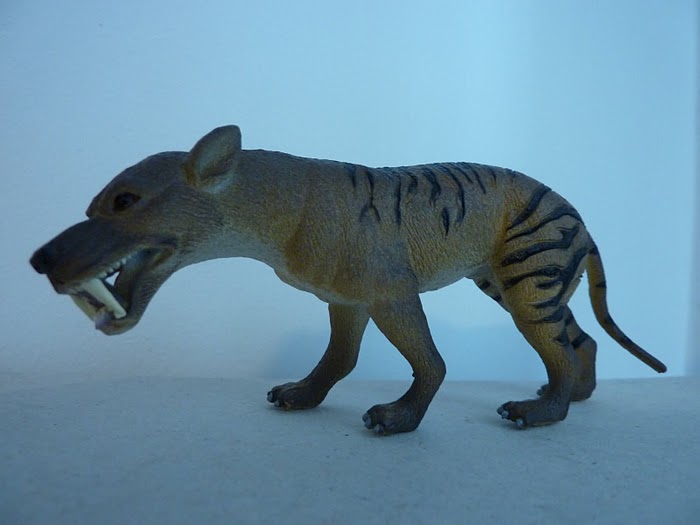
Existing for approximately 26 million years, Hyaenodonts were some of the largest predators of the Late Eocene and Early Miocene epochs. Their name comes from the sharp hyena-like teeth used to tear apart possible prey. The skulls of these animals were huge and well equipped for hunting, but their brains were quite small, something typical in primitive carnivorous mammals.
Existing for approximately 26 million years, Hyaenodonts were some of the largest predators of the Late Eocene and Early Miocene epochs. Their name comes from the sharp hyena-like teeth used to tear apart possible prey. The skulls of these animals were huge and well equipped for hunting, but their brains were quite small, something typical in primitive carnivorous mammals.