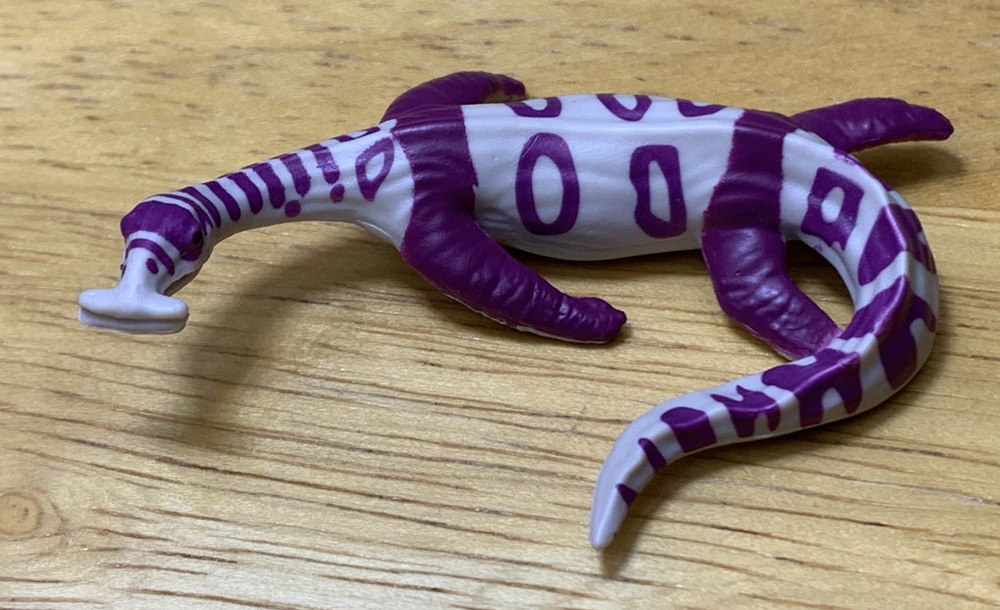
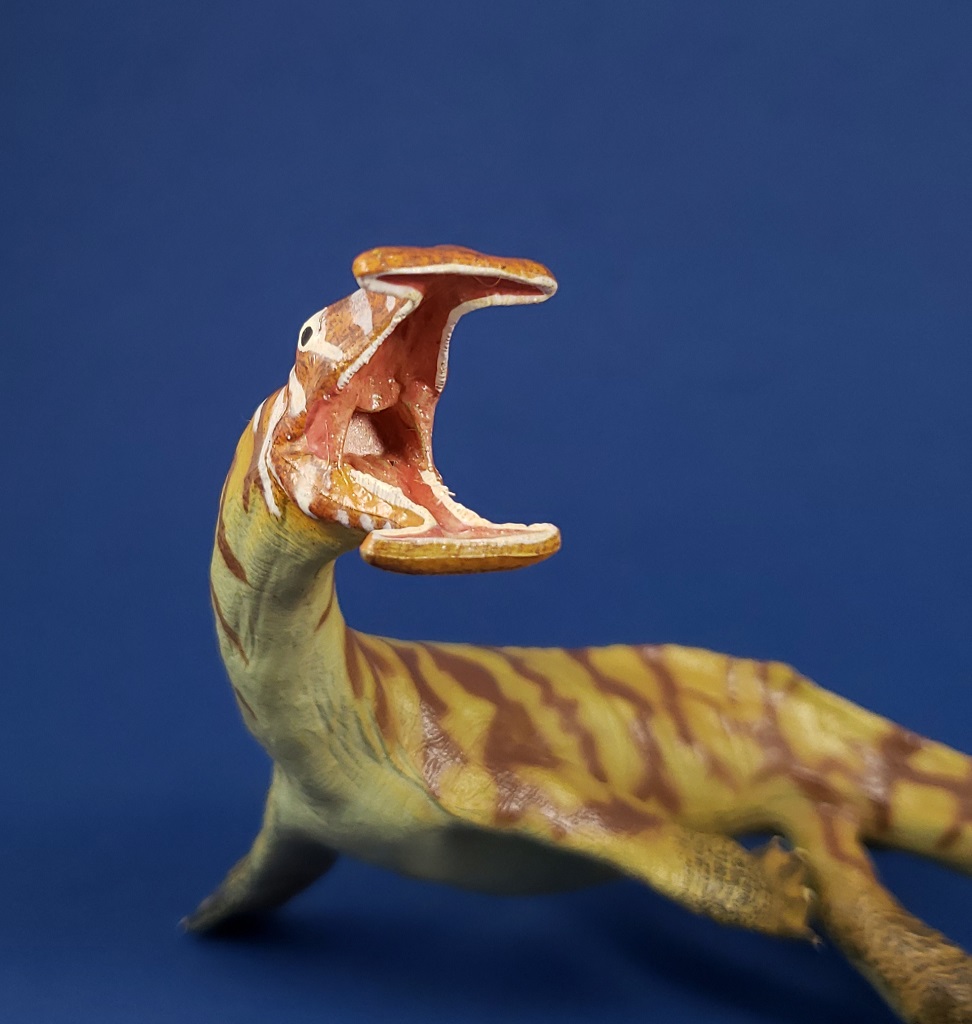
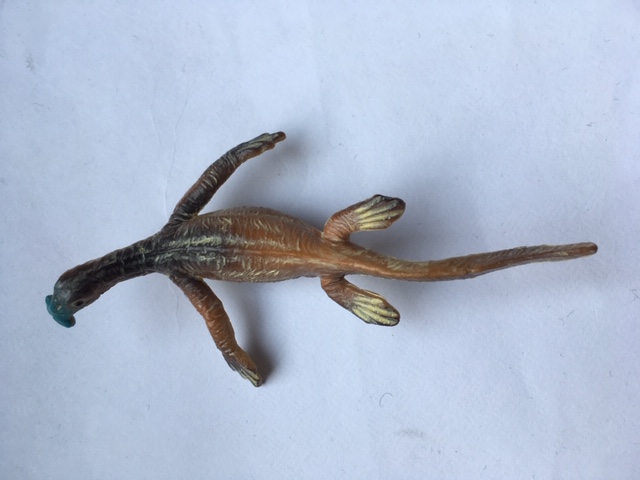
Although I’ve reviewed a number of these Yowie figures there’s one above all others that I’ve been wanting to obtain, the Atopodentatus, and I guess the 12th times the charm! Although listed as “common” on the Yowie rarity chart it had frustratingly eluded me for two months. Upon opening it I squealed with the kind of excitement that only blind...
I’m fascinated by how depictions of prehistoric animals change over time in the face of new evidence. This is the theme of my recent children’s book, The Tyrannosaur’s Feathers, which focusses on T. rex as a case study for this ‘make-over’ phenomenon. However, while the appearance of some prehistoric creatures, T. rex included, has gradually shifted over many decades, some...
The Middle Triassic began a mere five million years after the end-Permian extinction. On land, forests had finally staggered back from the destruction. Insects, mammal relatives, and sauropsids started to diversify into new–or sometimes rediscovered–morphologies. In the oceans, ray-finned fishes and coelacanths thrived, and some sauropsids returned to the sea. Among them was the earliest marine reptile thought to be...
Review and photos by Ravonium, edited by Suspsy
In 2014, a group of Chinese paleontologists working in Yunnan Province discovered a near complete skeleton of Atopodentatus, a new genus (and likely, lineage) of Sauropterygia (the main group of Mesozoic marine reptiles) with an odd and somewhat creepy skull unlike that of any other known vertebrate. This was reconstructed as a...