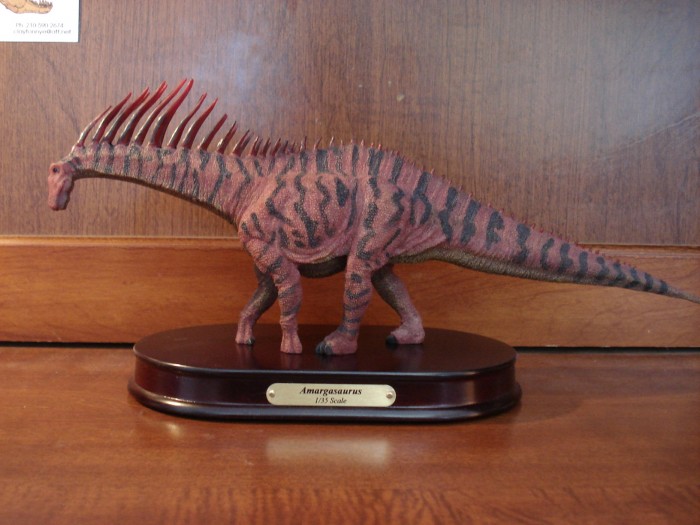
Most sauropods tend to more or less look similar; big body, long neck long tail. Rarely will a sauropod possess any distinguishing characteristics beyond those three things. Then there is Amargasaurus. This dinosaur was a smaller (relatively speaking) sauropod from the early Cretaceous in what is now Argentina. It is highly distinguishable amongst other dinosaurs by the double row of...
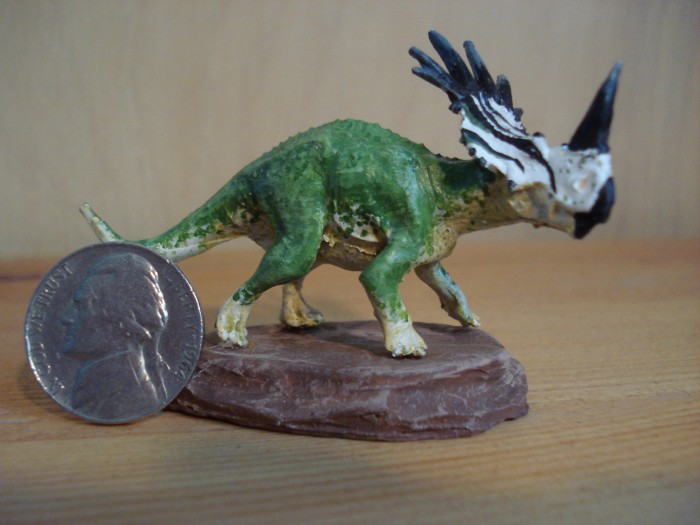
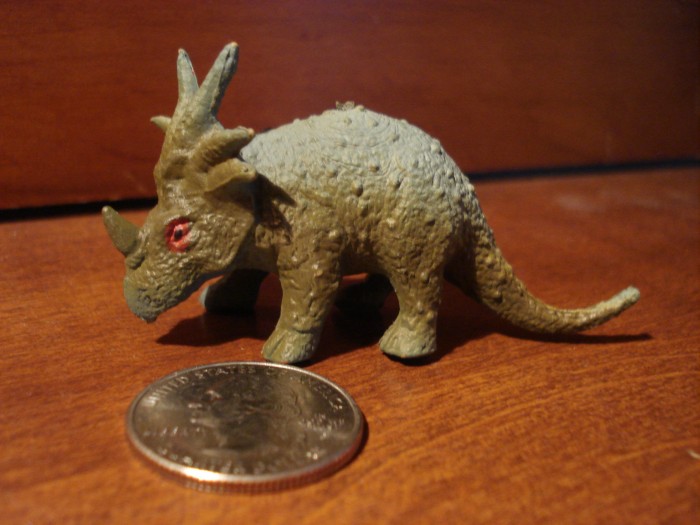
I really do like Styracosaurus very much. So much, in fact, that I decided to break my long absence from writing reviews with yet another rendition of this lovely spiked ceratopsid. Today we will be looking at David Krentz’s sculpt from his Antediluvia line.
Accuracy wise this little fellow is pretty much perfect. The head is nice and big when...
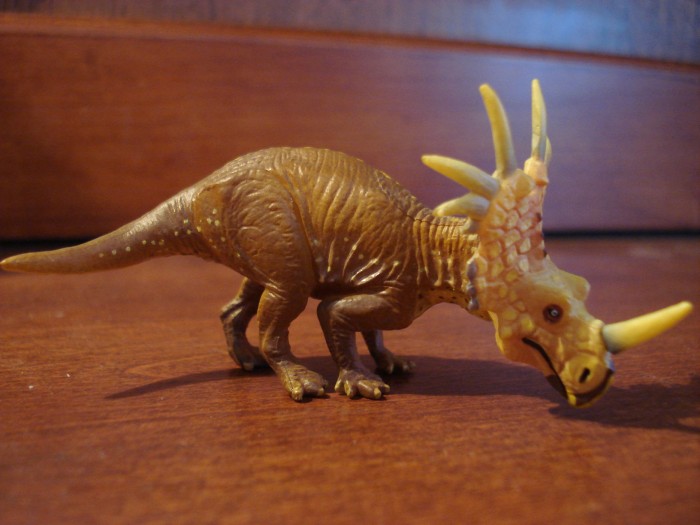
I really can’t get enough of this dinosaur it seems. This is what, the third review by me of a Stycacosaurus? This time I will be reviewing Carnegie’s rendition of the semi-popular spiked dinosaur.
Despite the vast myriad of dinosaurs species turned into models by them, Carnegie only has four ceratopsid species under its belt. Their styracosaurus is one of...
Styracosaurus was a centrosaurine ceratopsid from the Late Cretaceous in what is now North America. It is well known and popular amongst dinosaur fans because of its unique and menacing horn style. Despite the fact that many other ceratopsian dinosaurs with what seems to be increasingly bizarre horn adornments have since been unearthed, Styracosaurus still remains one of the most...
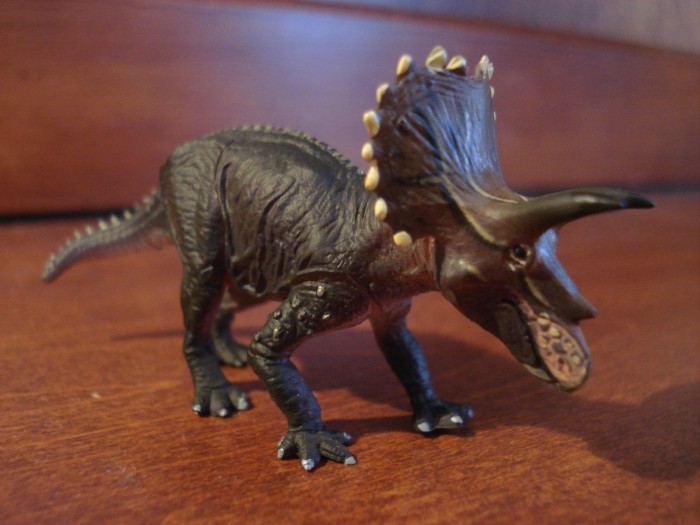
Triceratops is the largest known ceratopsian and lived at the very end of the reign of dinosaurs in what is now North America. Kaiyodo came out with two different renditions of this dinosaur, one in its first series and then a newer, more up to date rendition in its fifth series featured here.
This is a really accurate representation of...
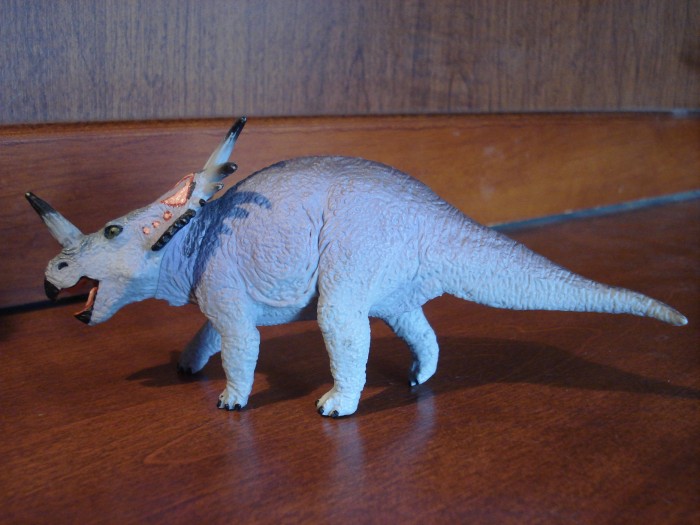
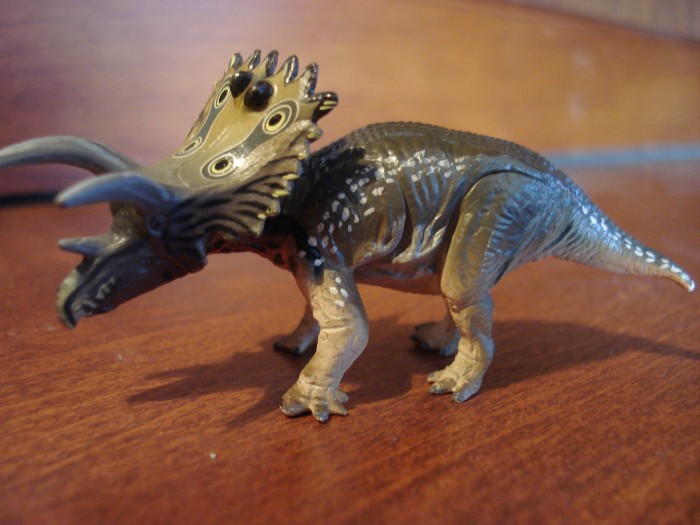
Anchiceratops was a large ceratopsian that lived during the late Cretaceous in what is now Canada. Like its relative, Chasmosaurus, Anchicratops is characterized by possessing a large frill complete with two large openings called finestre to prevent the skull from being too heavy.
When if comes to scientific accuracy, Kaiyodo did a lovely job with this tiny model. Being from...
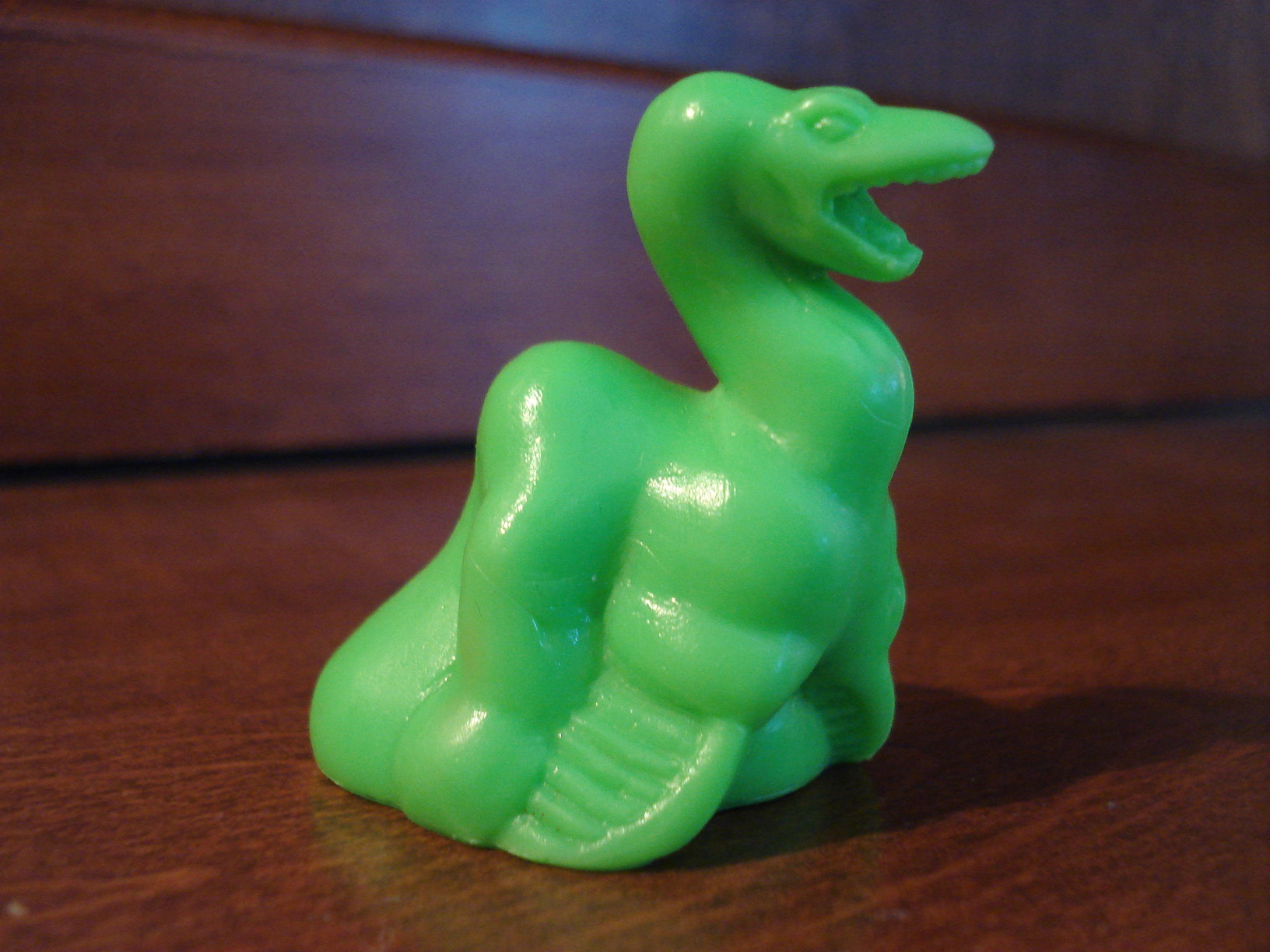
Monsters in My Pocket was a toy franchise that started in the 80s that consisted of a series of small, rubber figures. These figures were each only a few inches tall and could each come in a variety of solid colors. What makes this toy line special is that each figure is modeled after a certain creature that exists in...
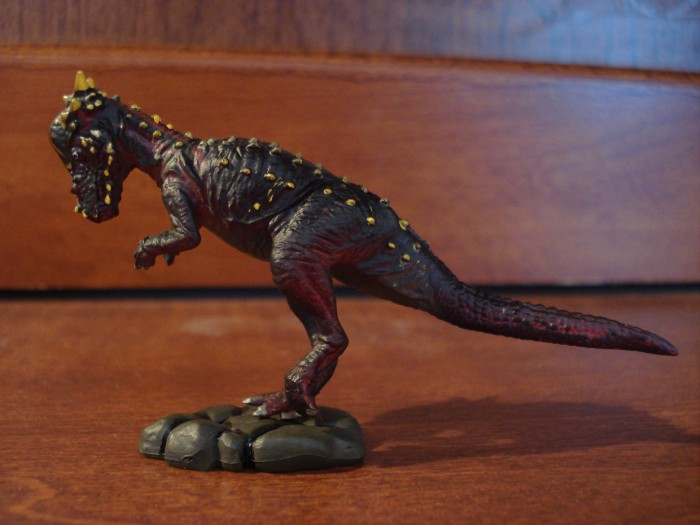
Pachycephalosaurus is the largest and most well recognized member of the dome-headed dinosaurs. It lived at the end of the Cretaceous 66-65 million years ago and therefore would have been amongst the last non-avian dinosaurs ever to be alive. It coexisted with other well known dinosaurs like Triceratops and Tyrannosaurus. Today I will be talking about Kaiyodo’s wonderful rendition of...
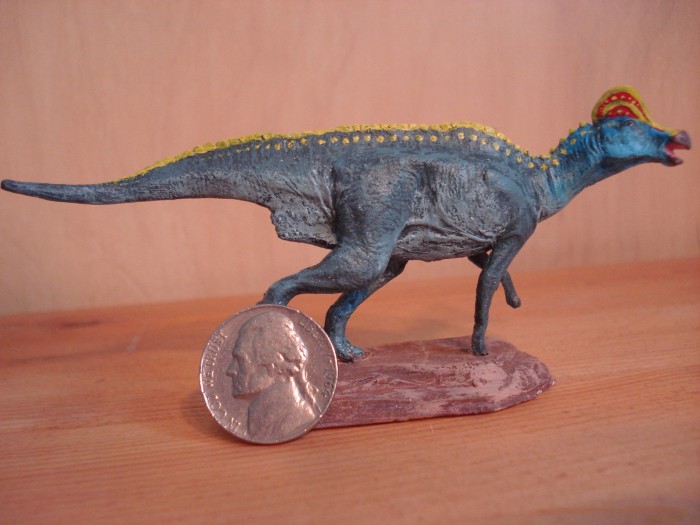
Corythosaurus is a relatively well known duck-billed dinosaur, or hadrosaur that lived in what is now Canada about 80-72 million years ago. Its name means “helmet reptile” because of the shape of the hollow crest that adorns its skull. The Corythosaurus that is part of the tiny and beautiful Antediluvia Collection, sculpted by artist, David Krentz, is no short of...
Review and Photos by Rugops
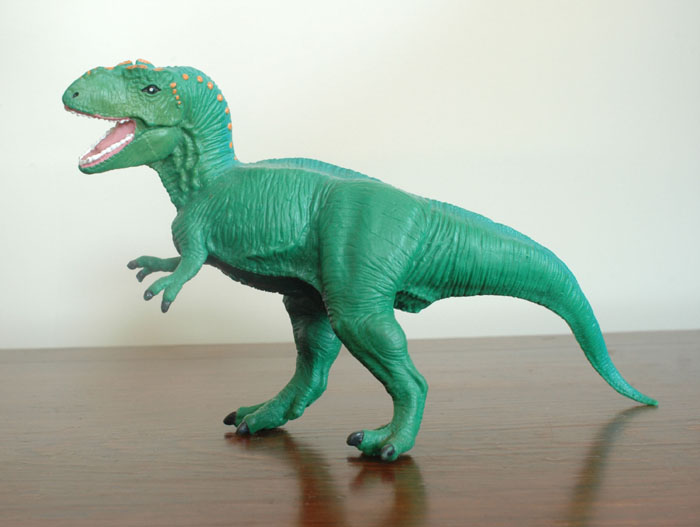
Another T rex review for the blog, and this time around it’s the Wild Safari original version.
One thing you probably notice about this figure is that it’s rather athletic and slim looking for a Tyrannosaurus. In fact it looks little bit like a Daspletosaurus or even an Albertosaurus. As with most of the early...
Review and Photos by Rugops
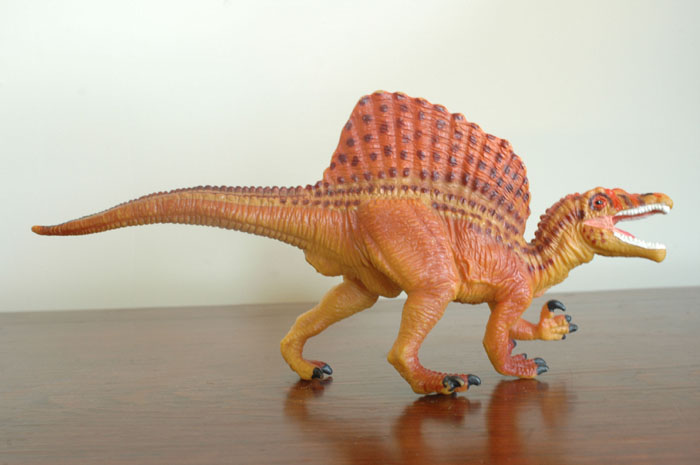
This model holds a special place for me, being my first museum quality figure, and the one that started off my collecting spree seven years ago. It is a really nice spino model, certainly nicer than the Wild Safari Suchomimus, the Carnegie Baryonyx, or the preceding Carnegie Spinosaur which had that ill fated head of...
Back in the early 70s a line of small hard plastic dinosaur toys were released by a company in England called Inpro. Despite the way they look by today’s standards they were actually quite educational as they were sold attached to a card that had information about the earth’s history and what not. If that’s not enough proof for you...

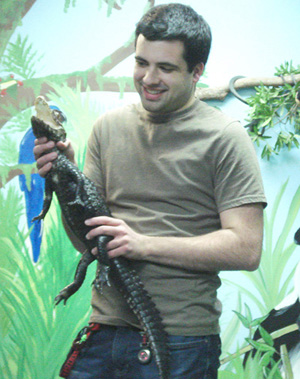 Chris DiPiazza (aka Griffin8891) has worked with exotic animals for seven years now and has been a wildlife exhibitor, bringing live animals to camps and schools to educate children, for almost four years. In addition to living animals, he has an equally, if not stronger affinity for prehistoric ones as well. He also loves drawing, sculpting and painting and has recently illustrated a series of illustrations of dinosaurs to be used in lecture slides at Rutgers University in New Brunswick, NJ (which can be found under his thread in the art section of the forums). As far as dinosaur models go, he does not consider himself a true collector, but one who buys only what truly interests him. He loves all species of dinosaurs and other manner of prehistoric creatures but ultimately, he considers the Ceratopsians his favorites.