

The Ediacaran is the first geological period with widespread evidence of multicellular life. And those fossils are actually quite extraordinary, as many of them are of soft-bodied creatures that normally do not preserve easily in the fossil record. Most of the fossils are casts and molds in sandstones.
Classification: Invertebrate



Review: Tully Monster (Paleocasts)

5 (5 votes)
The Tully Monster. Tullimonstrum gregarium. What was it? Ever since fossils of this marine predator were first discovered in the Mason Creek formation by amateur collector Francis Tully, paleontologists have been baffled trying to decipher its phylogenetic placement and relationships.
Review: Pterygotus (Plush by ZHONGXIN MADE)

5 (4 votes)
Pterygotus was a member of the order Eurypterida, often known as sea scorpions. More than a dozen species have been described, with the very largest, P. grandidentatus, being around 1.75 metres long and the smallest, P. kopaninensis, only growing to around 50 cm long.
Review: Anomalocaris Carri (by From the Shale Plushies)

5 (1 votes)
The Canadian Burgess Shale is one of the most important fossil deposits in the world due to the exceptional preservation of its fossils. Located within the Stephen Formation in British Columbia, it was deposited during the middle of the Cambrian period (or the Miaolingian, about 508 Ma).
Review: Jaekelopterus (Prehistoric World by CollectA)
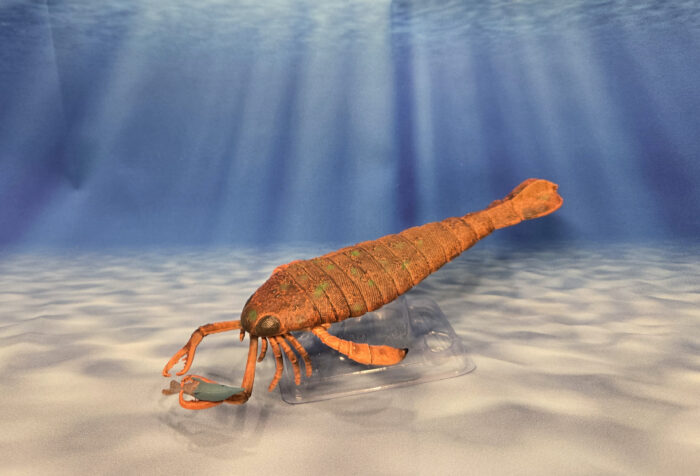
5 (7 votes)
The genus Jaekelopterus contains two species from the Early Devonian; fossils of J. rhenaniae were originally discovered in the Rhineland of Western Germany while those of J. howellii were originally discovered in Wyoming, USA. Jaekelopterus rhenaniae is not only the largest eurypterid, it is the largest known arthropod…EVER!
Review: Hallucigenia (Plush by ZHONGXIN MADE)

5 (6 votes)
The Cambrian was the very first period of the Paleozoic Era, beginning a little over 538 million years ago and lasting until the start of the Ordovician period 486 million years ago. And during those nearly 52 million years, all manner of weird and wonderful life evolved in the seas.
Review: Goticaris (Extinct Bath Bomb by Diamond Company)
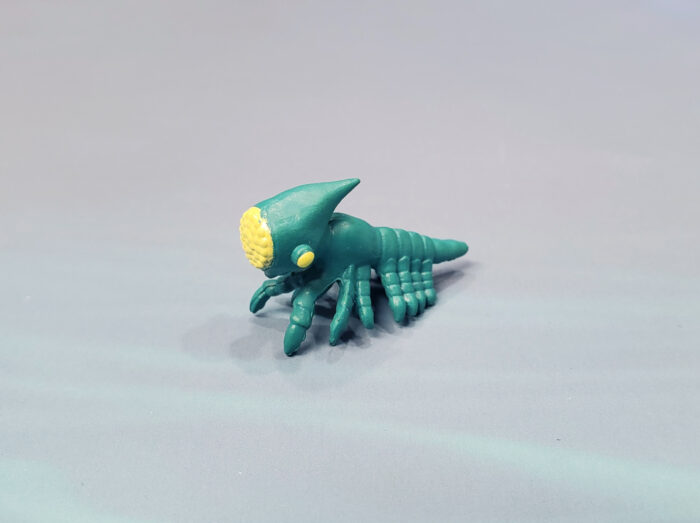
3.9 (21 votes)
Review and images by bmathison1972; edited by Suspsy
Goticaris longispinosa is a tiny, enigmatic arthropod originally described from both immature and adult forms from the Orsten Lagerstätten (Upper Cambrian) of present day Sweden. It was originally described as an early offshoot of the clade Pancrustacea but is now considered stem-group Mandibulata outside of Pancrustacea.
Review: Callichimaera perplexa (Rheic Studio)
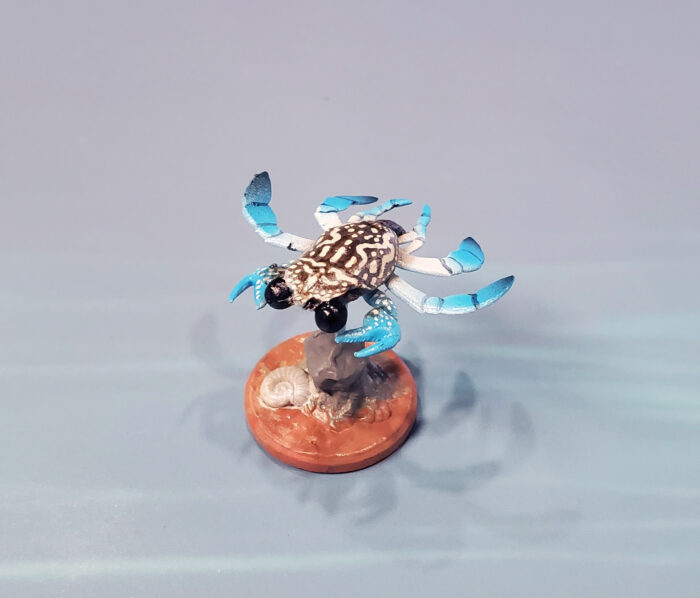
4.9 (53 votes)
Review and images by bmathison1972; edited by Suspsy
Callichimaera perlexa is an enigmatic crustacean from the Middle Cretaceous. Fossils have been found in the Churuvita Group in Colombia and the Frontier Formation in the United States. C. perlexa evolved during the Cretaceous Crab Revolution, which was a major diversification of ‘true’ crabs during the Cretaceous.
Review: Anomalocaris (CollectA)
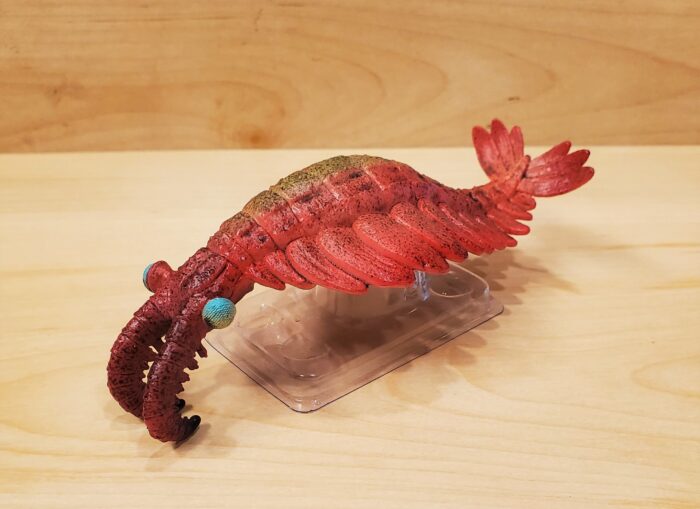
4.7 (133 votes)
Review and images by bmathison1972; edited by Suspsy
In 2023, CollectA added Anomalocaris canadensis to its growing collection of Paleozoic invertebrates, following fellow arthropod Redlichia and mollusks Passaloteuthis, Pleuroceras, Orthoceras, Cooperoceras, and Pravitoceras (not to mention an extant nautilus and horseshoe crab).
Review: Cooperoceras (Prehistoric World by CollectA)
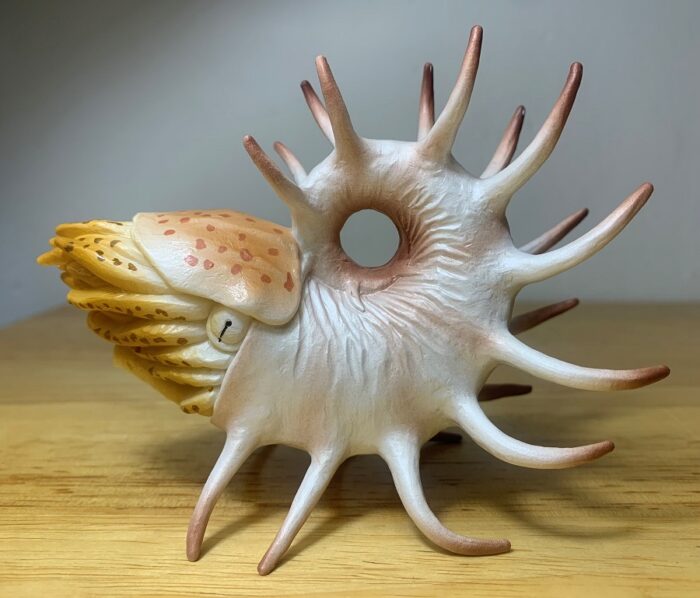
4.8 (28 votes)
Over the last 3 years CollectA has produced FIVE extinct cephalopods spanning the geologic ages between the Ordovician and the Cretaceous. A magnificent achievement that appears to have come to an end, for alas, no cephalopod has been announced for 2023. But do not despair, with figures of Koolasuchus and Anomalocaris on the horizon CollectA is continuing their streak of releasing the most diverse and interesting assortment of prehistoric critters of any mainstream company.
Review: Pravitoceras (Prehistoric World by CollectA)
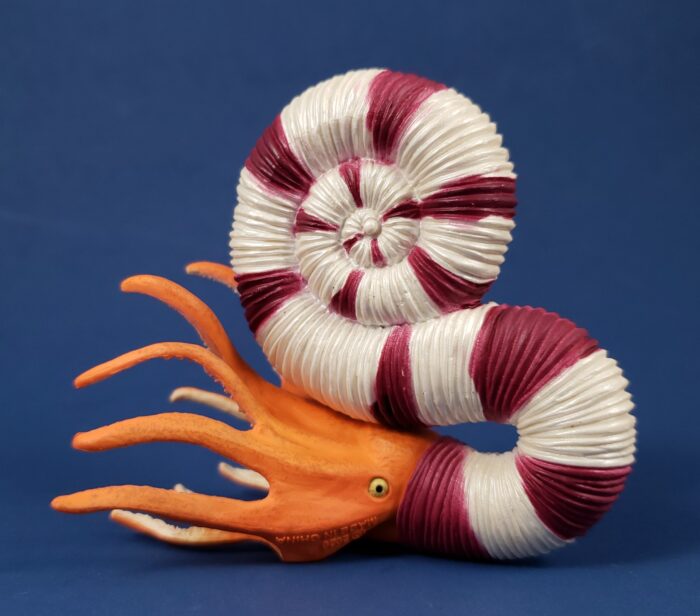
4.8 (18 votes)
Most paleontology enthusiasts are familiar with ammonites, the predatory mollusks with muscular arms and calcium carbonate shells. Most ammonites’ shells were disc-shaped coils (planispiral) that contained chambers, some of which afforded buoyancy, and one of which housed the squishy parts of the animal.
Review: Wiwaxia (Paleozoic Pals)
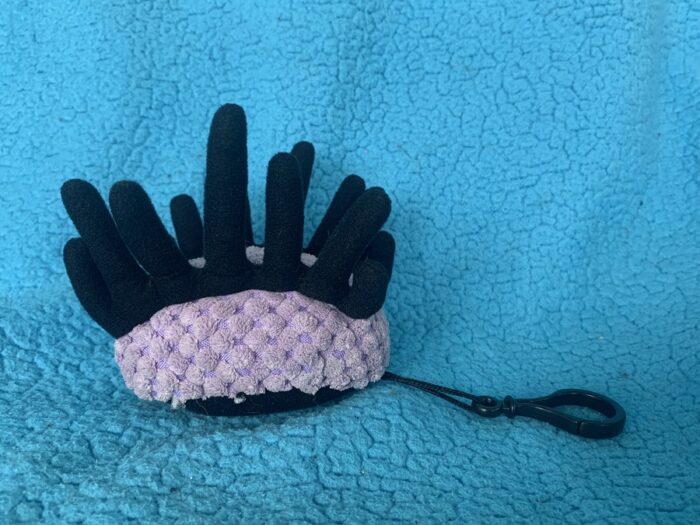
4.5 (14 votes)
In life, Wiwaxia was covered in spines and scales that would have made it about as cuddly as a sea urchin, an animal it resembled but was not related to. Good thing then that Paleozoic Pals made this plush Wiwaxia to snuggle with instead.